Ukraine is deploying private air defence companies to shield industrial facilities and critical infrastructure from relentless Russian drone strikes. The country launched a pilot programme last year that permits industrial firms to establish their own air defence units to guard their operations. According to the Defence Ministry, 20 companies have registered in the programme, and two are currently offering air defence services.
Carmine Sky, one of the operational firms, deploys multiple layers of protection tailored to individual client needs. The company's arsenal ranges from interceptor drones to automated turrets equipped with M2 Browning heavy machine guns. "It's like an onion, made of layers," explained Ruslan, a company representative who disclosed only his first name for security reasons. The firm operates in Ukraine's northeastern Kharkiv region and other areas, though Ruslan declined to identify specific clients.

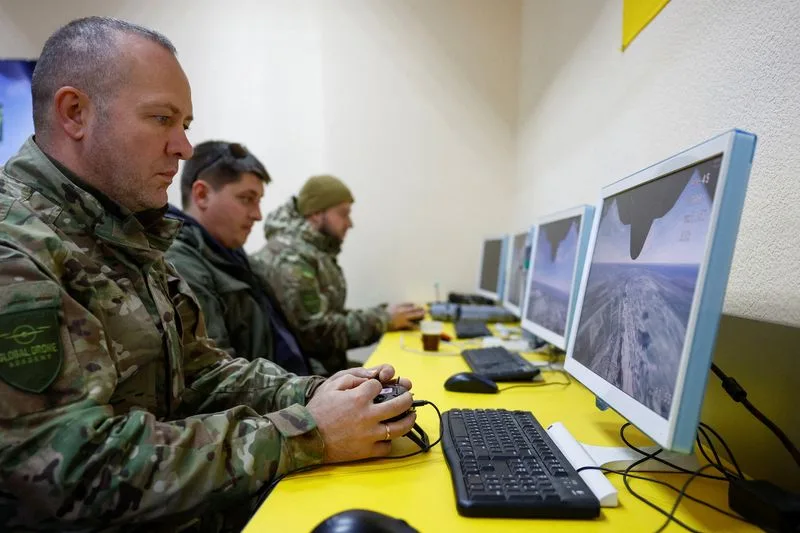
Russia launches thousands of low-cost, long-range attack drones at Ukraine each month. While state air defence systems intercept most of them, those that penetrate have damaged military infrastructure, factories, and energy facilities, leaving millions without heating and lighting during winter months. At Carmine Sky's control room, operators monitor for incoming drones from padded chairs using gamepads to search for targets. The facility itself is secured with masking nets and dim lighting.
The private firms operate within strict governmental oversight. They must receive authorisation from the Ministry of Defence before commencing operations and are integrated into the Ukrainian air force's command-and-control system. Firing decisions rest entirely with state authorities. "We are only complementing the traditional state air defence model," Ruslan said. "State air defence has a more strategic role, while we are local."
Defence Minister Mykhailo Fedorov highlighted early results last month, reporting that Russian drones had been shot down in the Kharkiv region by an unnamed private firm. On April 17, he announced that a private air defence unit had downed a jet-powered Shahed drone.
Recruitment standards are rigorous. Civilian recruits must pass extensive vetting, including polygraph tests repeated quarterly. Roman Korzh from Gvardiia, another firm offering air defence services, stated that training a drone interceptor pilot from scratch requires approximately three weeks for someone without prior experience. Those unsuitable for pilot roles join crews as spotters or technicians. Gvardiia primarily recruits from existing volunteer air defence formations with combat experience. Work schedules remain flexible, allowing recruits to balance military duties with civilian employment.