Utah's Sex, Kidnap and Child Abuse registry now lists 622 individuals as non-compliant, with most having no address on file, according to data obtained by a news investigation. The figures represent a recent increase from 559 non-compliant registrants on July 1, 2025, and 609 on October 1, 2024. The state legislature transferred management of the registry from the Utah Department of Corrections to Utah's Bureau of Criminal Identification within the Department of Public Safety, effective July 1, 2024. While BCI maintains the public database and updates it in real time, it does not handle enforcement activities.
Enforcement responsibility falls to individual police jurisdictions, federal authorities handling federal sex crime convicts, and Adult Probation and Parole for those under supervision. The fragmented system creates confusion about accountability. Stephanie Dinsmore, Public Affairs Director for the Department of Public Safety, stated the agency cannot comment on enforcement activities because BCI does not oversee compliance investigations. A review of the 622 non-compliant registrants found that 153 had addresses listed, but these were scattered across Utah with no identifiable pattern or specific jurisdiction assigned to track them.

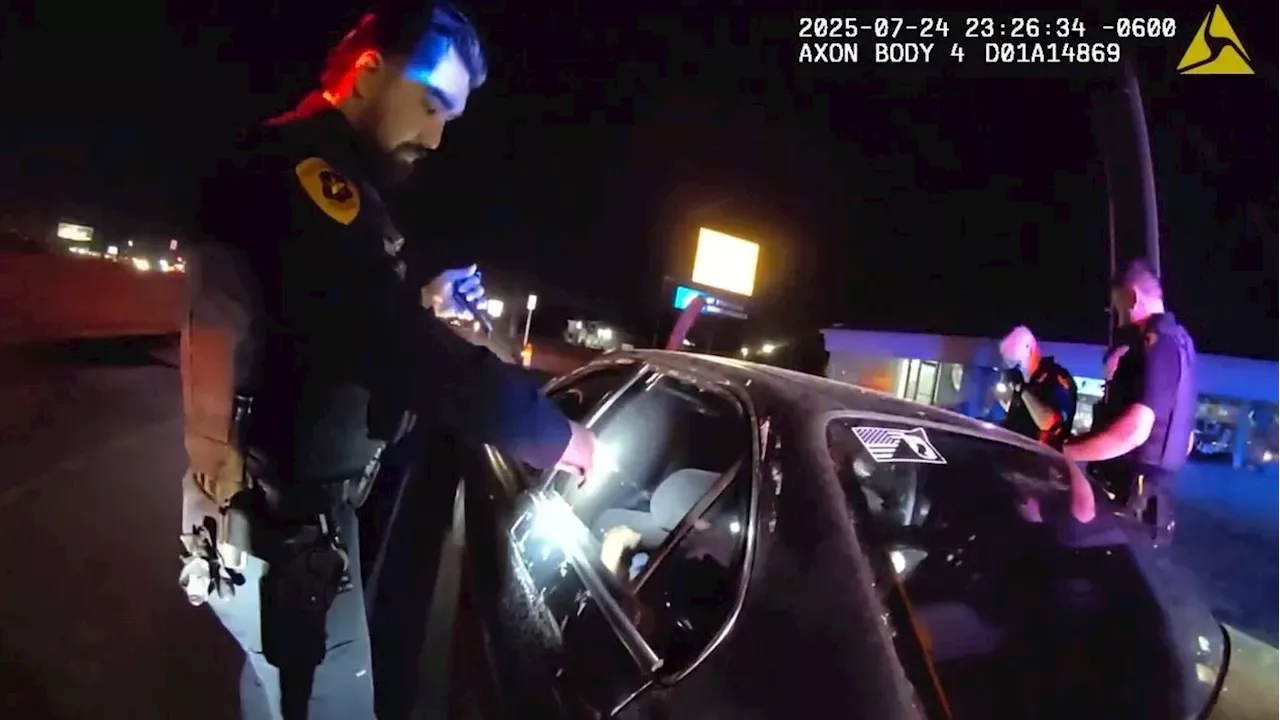
Body camera footage from Salt Lake City Police illustrates the challenge. In July 2025, officers discovered a non-compliant sex offender during a traffic stop, finding he possessed a knife and was associating with other non-compliant offenders. In December 2025, registered sex offender Lee Oliver Larsen was pulled over and claimed he lived at his uncle's house, but officers later confirmed he was living in his car. Larsen, 31, was arrested on charges including possession of a dangerous weapon by a prohibited person, a third-degree felony. Court records show he was convicted in 2015 of forcible sexual abuse. He remains incarcerated in Salt Lake County Metro Jail.
Different law enforcement agencies employ varying compliance strategies. Unified Police conduct monthly compliance checks through the Special Victims Unit. Salt Lake City Police perform routine checks for offenders within their jurisdiction. West Valley City Police previously had state funding for proactive checks but that money is no longer available; they now respond only to identified violations. Ogden Police operate a dedicated unit with three or four officers focused on sex offender compliance. Utah County, Weber County, and Davis County sheriff's offices also maintain specialized units, with Davis County checking registrants every six months. Weber County reported it is forming a proactive unit for home compliance checks this summer.
Staffing limitations constrain enforcement efforts. Sgt. Aymee Race of Unified Police noted that agencies with small officer counts struggle to handle the large number of non-compliant registrants, particularly when offenders move out of state. Some registrants in the non-compliant category are in federal immigration custody or have been deported, but the majority remain listed as "location unknown."
Victims and parents express concern about the gaps in the system. Erin Gehring, a mother of four and a victim, described an incident in which a man exposed himself to her and her 2-year-old daughter, only to later discover he had a history of similar behavior and lived in a neighborhood with children. Callie Bowen, a mother of three, said, "Something needs to be done, something needs to change because this is not ok," adding that families rely on state support to keep their children safe. Lawmakers contacted during the investigation agreed to examine whether a statewide standard enforcement policy is needed.