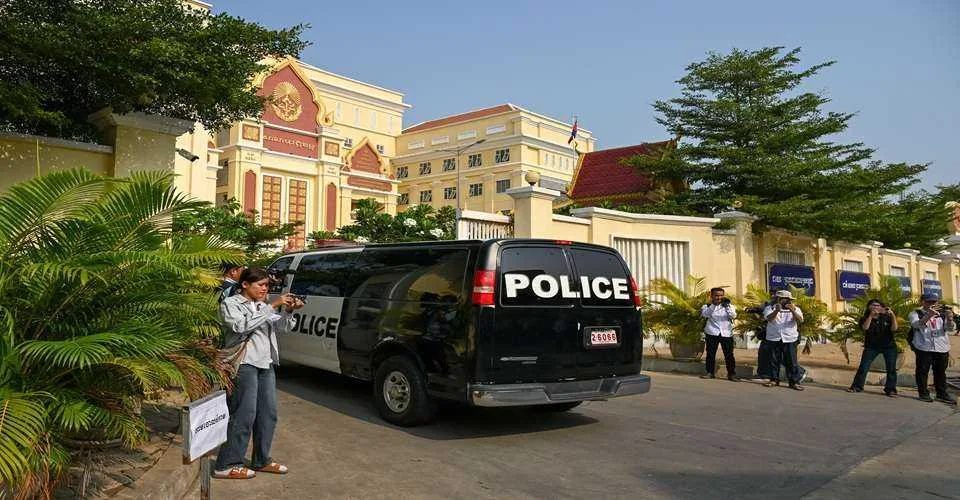
The Phnom Penh Court of Appeal upheld a treason conviction against Kem Sokha, 72, founder of the now-dissolved Cambodia National Rescue Party, on April 30. The court ordered him to serve a 27-year sentence imposed in 2023 and added a five-year travel ban after prosecutors sought enhanced penalties. The decision has intensified international scrutiny of Cambodia's judicial system and democratic practices.
Kem Sokha was initially detained in 2017 after authorities cited a video recorded in Springvale, a Melbourne suburb with a significant Khmer diaspora population, as evidence of conspiracy with the United States to overthrow the government. In the video, Kem Sokha discussed adopting electoral strategies modeled on Yugoslavia, where President Slobodan Milošević was voted out of power in 2000. He referenced receiving strategic advice from American experts and university professors.

The verdict has drawn sharp responses from Western capitals. The British embassy called for his immediate release, stating that doing so "would help strengthen democracy in Cambodia." Germany's ambassador, Stefan Messerer, underlined the importance of judicial independence and fundamental freedoms. Canadian ambassador Dominic Des Roches expressed regret, while the Australian embassy stated that the outcome "further reinforces" longstanding concerns about using legal mechanisms to suppress political opposition.
The United States, which has maintained cordial relations with Cambodia under the Trump administration, notably did not comment on the verdict. However, the Biden administration had previously characterized Kem Sokha's case as "a miscarriage of justice" based on "a fabricated conspiracy."
Human rights organizations condemned the decision. Human Rights Watch's deputy Asia director, Bryony Lau, called the prosecution "bogus" and warned that upcoming commune elections in 2027 and national elections in 2028 would lack legitimacy while political opponents face unjust punishment. Amnesty International and United Nations experts have similarly argued the case is politically motivated and violates international human rights standards.
The CNRP came close to winning the popular vote in the 2013 elections but was outlawed by courts following Kem Sokha's 2017 detention. More than 100 opposition figures have faced comparable charges, with many seeking refuge abroad and establishing the Khmer Movement for Democracy. The Cambodian People's Party secured every contested seat in both the 2018 and 2023 elections.
Kem Sokha's lawyer, Pheng Heng, indicated the legal team was considering an appeal to the Supreme Court, their final recourse. The Cambodian judiciary ranks second to last on the World Justice Project's Rule of Law Index.