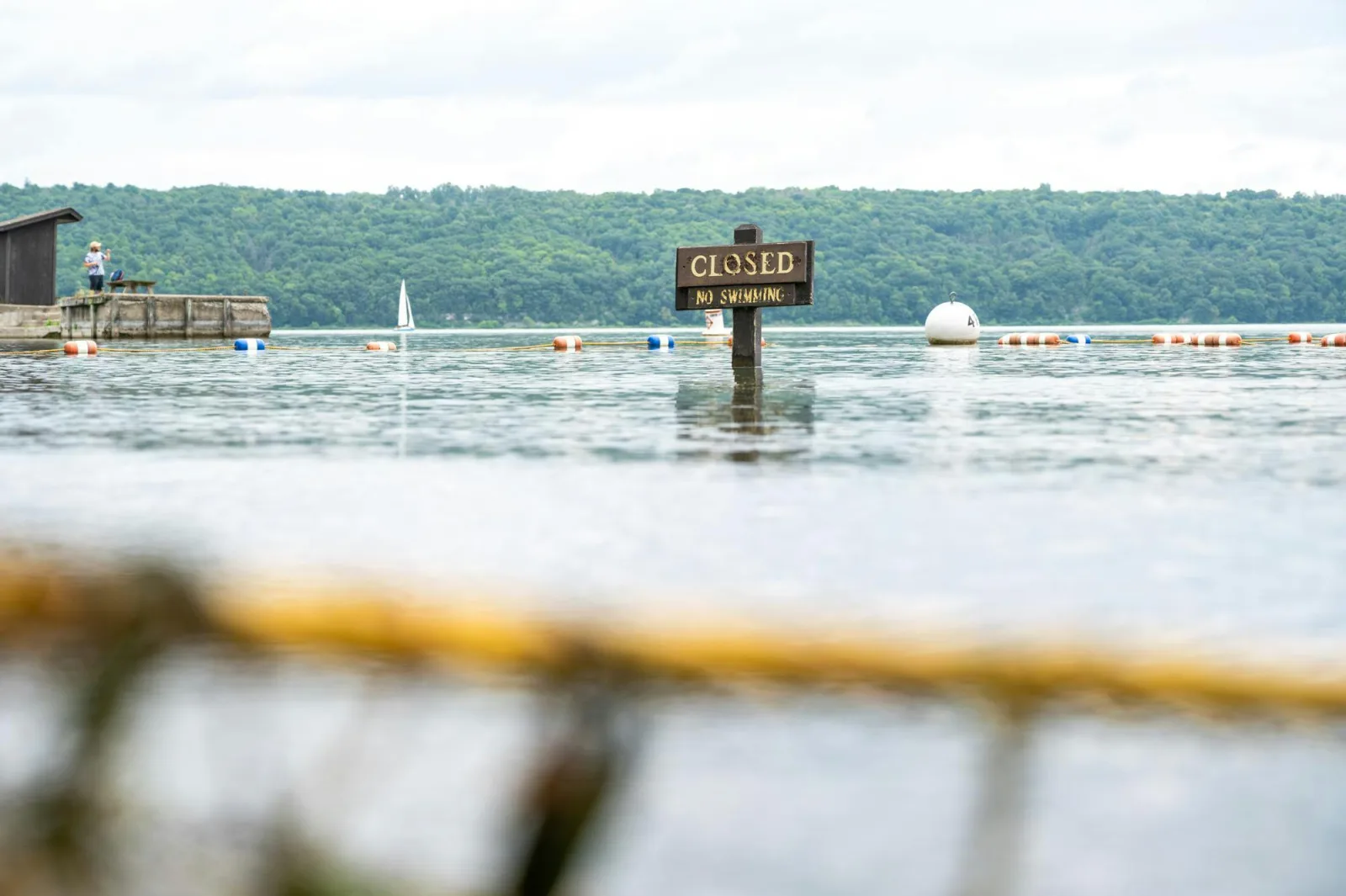
Judge Mark Masler of the Tompkins County Supreme Court ruled on Tuesday that a case brought by FLX Strong and Cayuga Environmental Action Now against TeraWulf, its subsidiaries, and the Lansing Zoning Board of Appeals may move forward. The environmental groups are challenging the zoning board's decision to classify TeraWulf's proposed data center as a "general processing facility" on property adjacent to Cayuga Lake, where the decommissioned Milliken power plant once stood.
The zoning board and TeraWulf had filed a motion to dismiss the lawsuit, arguing that the alleged harms described by the environmental groups were speculative in nature. In his decision, Masler rejected this argument. He wrote that the claimed harm "is not speculative" and noted that when deciding motions to dismiss, a judge must assume all claims made by the petitioners are true.

The two groups filed suit in January after the Lansing Zoning Board of Appeals voted 3-2 in December to approve the data center's classification. FLX Strong and CLEAN alleged that noise from the facility would cause environmental harm to Cayuga Shores and would be audible from residents' homes. They also argued the noise would harm bird populations in the area. Christopher Tessaglia-Hymes, a field researcher at the Cornell Lab of Ornithology, and Harold Mills, a member of FLX Strong and an audio signal processing engineer with 40 years of experience, both testified about the detrimental effects of constant, pervasive noise on wildlife and the birdwatching experience.
Masler determined that the testimony from these experts was sufficient to establish that the petitioners' claims were not speculative. He noted that testimonies about noise audible in homes fall squarely within matters protected by zoning ordinances, making the case suitable for legal review. The judge also found that the environmental groups' challenge to the zoning board's use of the term "general processing"—a category not defined in the Lansing Zoning Code—could not be described as "entirely unreasonable as a matter of law."
The zoning board and TeraWulf are required to file their answers to the lawsuit by May 22. The ruling comes after the New York State Department of Environmental Conservation granted a permit to TeraWulf affiliate Cayuga Operating Company to draw 1 million gallons of water daily from Cayuga Lake.