

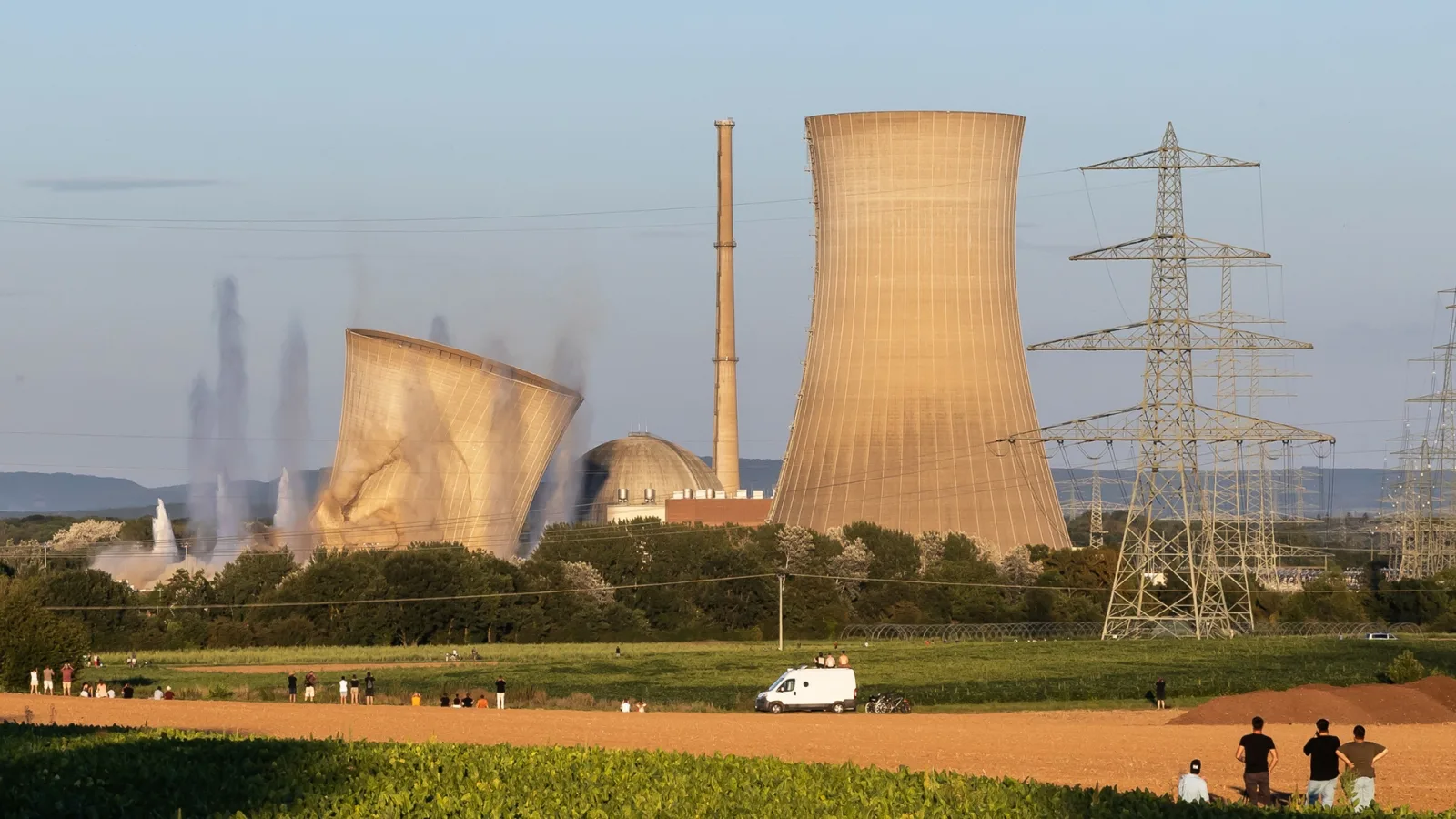
A recent study by researchers from the University of Manchester, the UK National Nuclear Laboratory, and Clemson University shows crushed concrete from decommissioned nuclear facilities can immobilize up to 98% of radioactive strontium-90. This discovery offers a promising pathway to enhance management of lightly contaminated waste generated during nuclear decommissioning.
Strontium-90 is a highly mobile radioactive isotope produced during nuclear fission, known for its ability to migrate through groundwater and pose environmental risks. It features a half-life of around 28.8 years and emits harmful beta radiation as it decays. This isotope has been a major contaminant at sites such as Sellafield in the UK and Hanford in the US, as well as being released during nuclear accidents like Chernobyl and Fukushima.

To evaluate how crushed concrete interacts with strontium-90 over time, the researchers conducted controlled laboratory experiments using crushed concrete samples provided by the UK’s Nuclear Decommissioning Authority. The concrete was mixed with synthetic groundwater containing stable strontium or trace amounts of strontium-90 and subjected to two disposal scenarios: one mimicking sealed, low-oxygen conditions, and the other simulating air-exposed environments typical of shallow on-site waste storage.
The results showed a significant difference based on oxygen exposure. Under air-equilibrated (oxygen-rich) conditions, crushed concrete removed approximately 82% of strontium from solution within three months. In contrast, low-oxygen sealed conditions captured about 14%. This disparity is linked to the formation of calcite mineral in oxygen-rich environments. Calcite, formed through concrete’s reaction with atmospheric carbon dioxide, can accommodate strontium atoms by substituting calcium within its crystal lattice, thus locking the radioactive element into a stable mineralized form.
X-ray absorption spectroscopy confirmed that strontium was indeed incorporated into calcite crystals, explaining the mechanism behind this effective immobilization. This process makes crushed concrete more than a passive waste material—it acts as an active barrier that captures and holds strontium-90, potentially preventing its spread through groundwater for decades.
This finding suggests that lightly contaminated concrete waste, which is increasing as nuclear plants undergo decommissioning, could be repurposed as a material for safer on-site disposal. Utilizing crushed concrete’s natural capacity to trap radioactive isotopes offers a cost-effective strategy to mitigate environmental risks without the need for complex treatment systems.
By improving the long-term stability of radioactive elements within disposal sites, this approach could contribute to more sustainable nuclear waste management practices worldwide.