

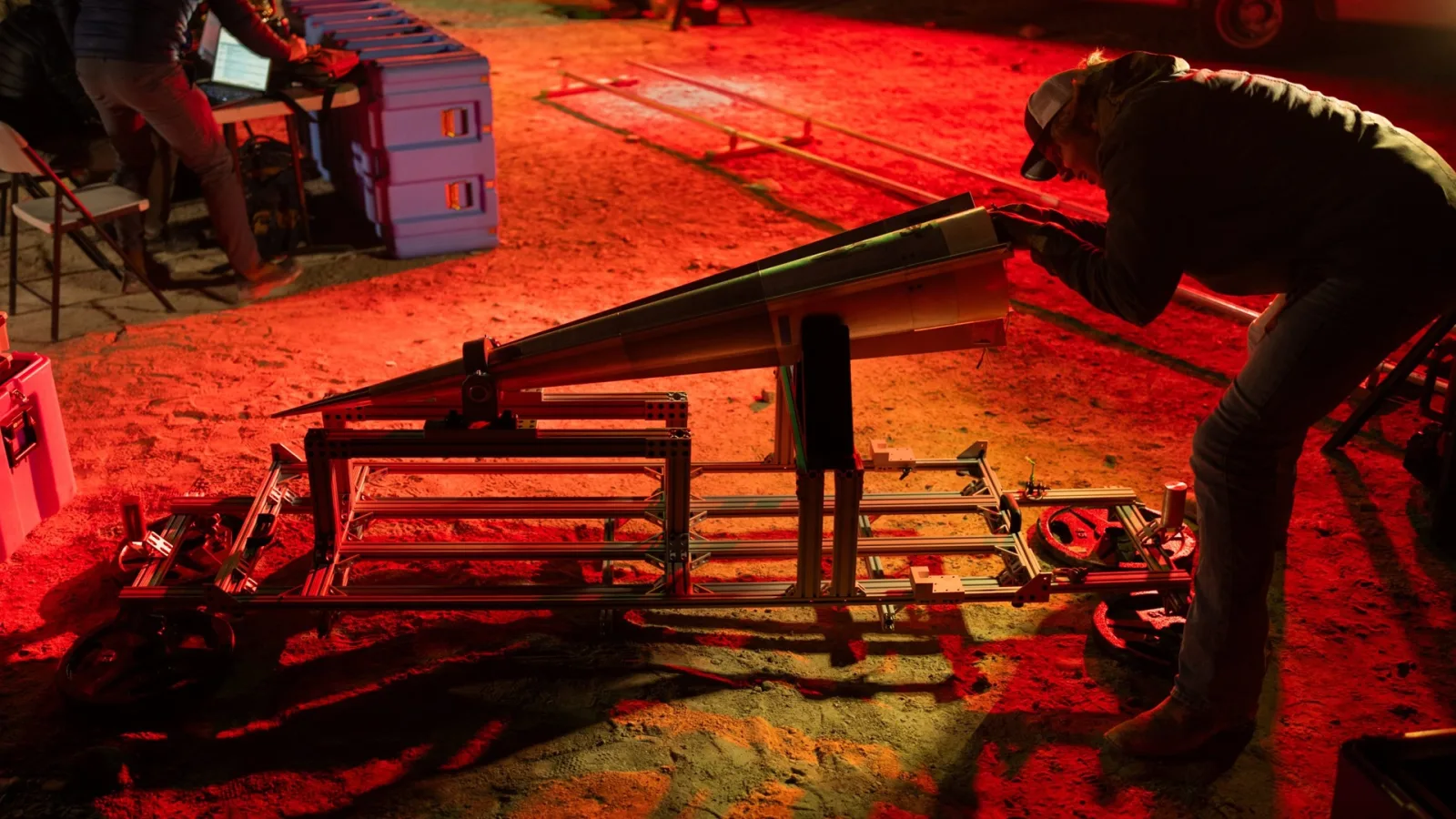
The United States has introduced a groundbreaking cone-shaped vehicle prototype tailored to endure the intense heat and vibration encountered during high-speed nuclear weapon flights. Named Aires Tide, this 11-foot-long platform serves as a high-tech flight test unit equipped with numerous sensors to collect critical data on environmental stresses nuclear weapons face when airborne.
Developed through a collaboration among Los Alamos, Sandia, and Lawrence Livermore National Laboratories alongside the Kansas City National Security Campus, Aires Tide marks a significant milestone under the National Nuclear Security Administration’s Genesis Mission. This initiative leverages artificial intelligence and supercomputing networks to accelerate the design, manufacturing, and testing cycle on security-related projects.

One of the project's standout achievements is its incredibly swift development timeline. The design-to-test process was compressed into just five months, compared to the traditional two-year timeframe. This was enabled by AI-powered optimization of the vehicle’s internal structure, including improved sensor placement and power system arrangement. The prototype’s structure, made from Inconel—an alloy known for exceptional resistance to heat and stress—was produced in under six days on a Velo Sapphire XC metal 3D printer. Seven nested parts were printed simultaneously and then assembled into the final form.
Prior to completing the full-scale demonstrator, a half-sized model underwent a successful balloon drop test at the US Army Dugway Proving Ground, gathering valuable early flight data. This iterative approach reflects a major cost reduction and efficiency boost; the team reports production costs at a fifteenth of conventional methods, with turnaround times measured in weeks.
By collecting real-time metrics on temperature, mechanical vibration, and other flight stresses through integrated sensors and power buses, Aires Tide aims to enhance the understanding of nuclear weapon behavior during atmospheric transit. This knowledge will inform and improve the design and reliability of future national security technologies.
The fusion of AI with digital engineering tools reveals a new paradigm in defense prototyping, offering greater agility to respond to emerging threats. The project highlights the potential for rapid, cost-effective innovation made possible by combining advanced materials, additive manufacturing, and artificial intelligence.