

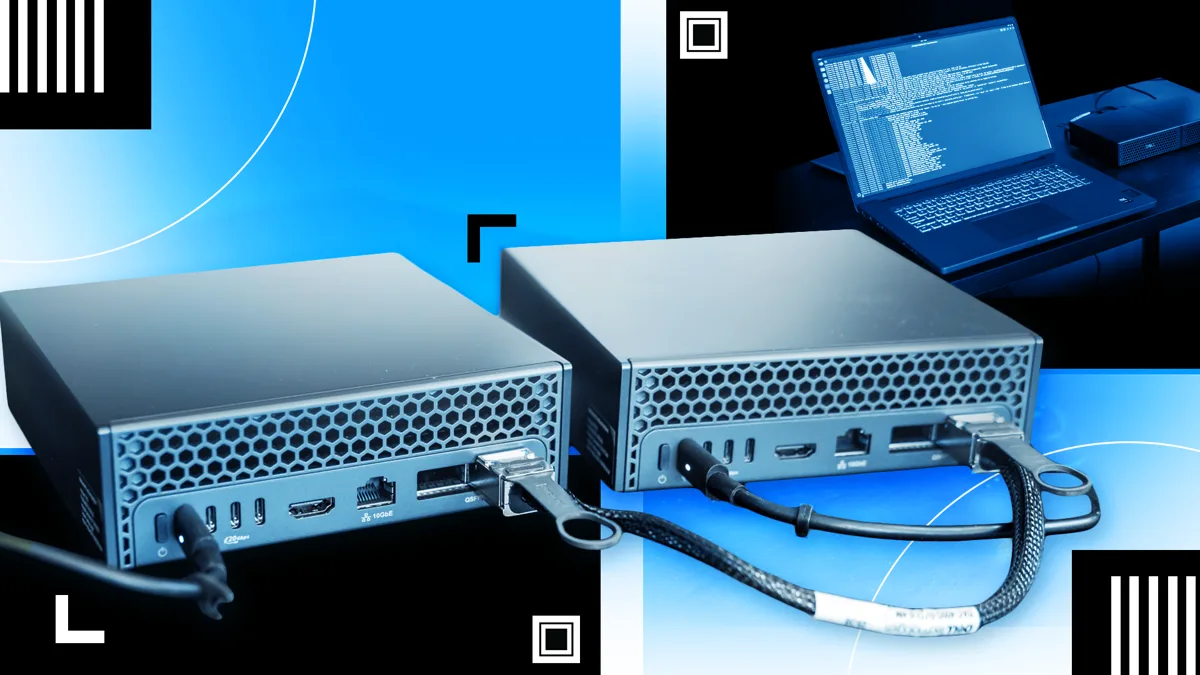
Linking two Nvidia DGX Spark AI boxes into a single cluster marks a significant step beyond typical AI development setups. While a single Dell Pro Max equipped with Nvidia’s Grace Blackwell GB10 “superchip” is powerful, its limits become evident when running large AI models. By clustering two of these systems, the combined processing power and memory capacity can be harnessed to handle more complex workloads, distributing the AI model across multiple nodes for increased performance.
This distributed computing technique, known as clustering, allows machines to work in tandem rather than as isolated units. For AI, it means that the task of processing large models is split—using tensor parallelism—to enable simultaneous computation, amplifying both speed and memory availability. The analogy often used is that of a single chef trying to prepare a massive, multi-course meal compared to sharing the workload with an additional chef, each contributing resources and effort to meet the demand efficiently.

Clustering Nvidia’s DGX Spark systems introduces practical challenges. Setting up a multi-node environment at home involves navigating beyond official support materials, delving into Linux, and troubleshooting unforeseen issues. The complexities include network configuration, synchronization between nodes, and optimizing workloads to avoid bottlenecks.
Despite these obstacles and the steep learning curve, the experiment highlights that multi-node AI computing is becoming accessible not just to enterprises but to technology enthusiasts and independent developers. Though the GB10 systems come with a significant price tag—prices have notably increased due to memory shortages—the investment allows users to push AI workloads beyond typical limits. This can be especially valuable when running multiple demanding models or experimenting with AI projects that require extensive computational resources.
The experience reveals that clustering AI systems at home is both demanding and rewarding. It requires patience and willingness to explore technical territory outside vendor playbooks but opens new doors for personal AI innovation. For those considering this path, it demonstrates the potential of leveraging multi-node processing to overcome the constraints of single-machine setups, even in a home environment.