

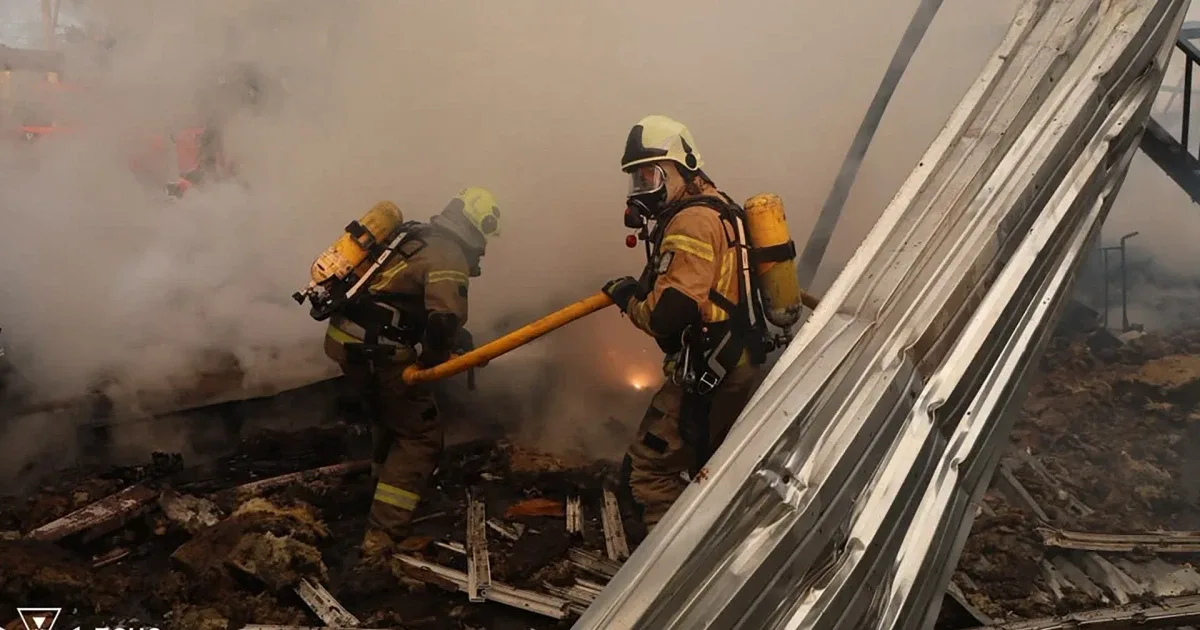
Two people died and 19 were injured in Kyiv after Russian forces launched a barrage of ballistic missiles and drones targeting the Ukrainian capital. The overnight assault affected three districts—Solomianskyi, Darnytskyi, and Dniprovskyi—resulting in fires and explosions at 11 different sites, including damage to civilian areas and infrastructure.
The attack came in successive waves, involving 12 missiles—half of which were ballistic—and 121 drones. Ukraine's air defenses managed to neutralize two missiles and 111 drones through interception or electronic suppression, yet several direct hits still occurred, demonstrating the persistent challenge Kyiv faces in protecting its airspace.

Russia's Defense Ministry claimed the strikes targeted drone production facilities in Kyiv as well as ports in the Odesa region, maintaining that only military or quasi-military sites were involved. However, the ongoing pattern of strikes has repeatedly affected civilian neighborhoods, drawing international condemnation.
Recent attacks on Kyiv have been unprecedented in scale. Earlier in July, Kyiv experienced what officials called the largest barrage of the war, with dozens of ballistic missiles and hundreds of drones launched in a single assault. Despite extensive Ukrainian countermeasures, several missiles struck strategic and residential areas, causing significant civilian casualties. The United Nations reported an average of 170 civilian casualties per day across Ukraine during July, underscoring the human toll of these strikes.
Ukraine continues to press for increased air-defense capabilities, with President Volodymyr Zelensky emphasizing the urgent need for advanced systems such as Patriot missiles to counter the intensified missile barrage. As Russia’s attacks escalate, the demand for international military support to safeguard Ukrainian cities remains pressing.