

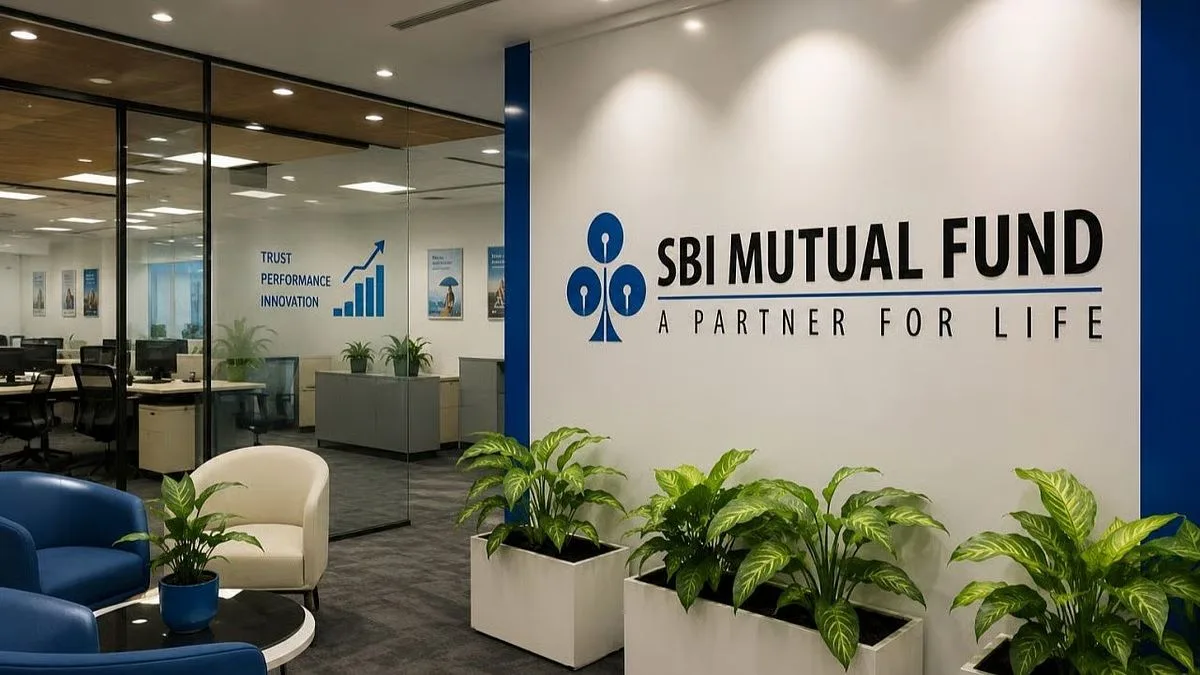
SBI Funds Management Ltd has outlined critical risks to its business model in the prospectus for its upcoming initial public offering (IPO), set to open mid-July. The company emphasized that its financial performance heavily depends on assets under management (AUM), which are vulnerable to market volatility, investor behavior, and regulatory shifts.
The prospectus reveals that any downturn in quarterly average assets under management (QAAUM), stemming from adverse market movement, redemptions, or changes in investment product mix, could reduce fee income and negatively impact profitability and cash flows. Notably, a significant portion of the firm’s mutual fund AUM originates from B-30 cities, where investor redemption patterns historically show higher volatility during market slumps, increasing potential downside risks.

SBI Funds Management also identified concentration risk, with a large share of its mutual fund assets concentrated in a limited number of schemes. Prolonged underperformance in these funds could materially affect the firm’s revenue stream. Furthermore, the company depends substantially on the State Bank of India’s extensive distribution network and brand reputation for attracting and retaining clients. Any weakening of this relationship or changes in commercial terms pose a threat to future growth.
Operational risks form another critical area of concern. The company pointed to vulnerabilities related to technology failures, cybersecurity breaches, disruptions to business continuity, and dependence on third-party service providers. It also acknowledged risks tied to emerging technologies such as artificial intelligence, which if not managed properly could disrupt services, invite regulatory scrutiny, or damage investor trust.
A cornerstone of SBI Funds Management’s earnings is the investment management agreement (IMA), which governs its relationship with mutual fund sponsors and generates almost all of its revenue. The company cautions that termination of the IMA without a suitable replacement could severely impact its core business.
Additionally, evolving regulatory frameworks in the mutual fund industry present ongoing challenges. Changes to fee structures, tighter limits on total expense ratios (TER), and competition from passive investment products may pressure operating margins and profitability going forward.
The IPO itself is a fully offer-for-sale (OFS) transaction, with shares priced between Rs 545 and Rs 574. Subscription will be open for three days, offering investors a chance to participate in the fund house’s growth story amid these outlined risks.