

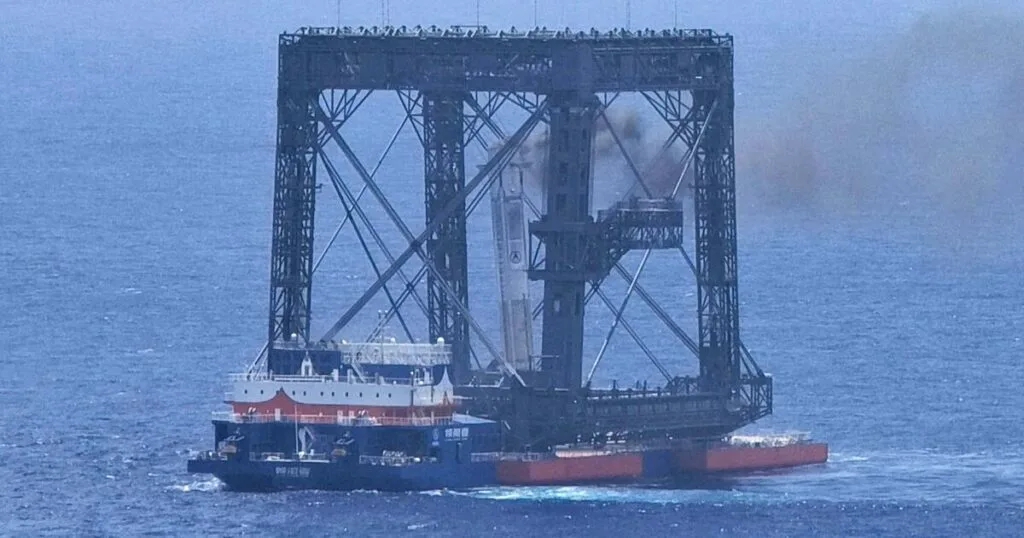
China completed a pioneering achievement in its space program by retrieving the first stage of a Long March-10B rocket after launch, landing it on a sea platform. This marks the first time China has recovered a rocket booster, aligning itself with the emerging global trend of rocket reusability to reduce launch costs.
The liftoff saw the rocket’s first stage detach from the upper stages and return safely to a floating platform in the sea near Hainan Island. The Long March-10B’s reusable design is capable of delivering payloads up to 16,000 kilograms into low Earth orbit, showcasing China’s growing capabilities in heavy-lift and sustainable launch technology.

The breakthrough places China among a select group of space actors focused on booster recovery and reuse, a practice pioneered and extensively developed by the American company SpaceX. Since 2015, SpaceX has perfected the art of landing Falcon 9 boosters both on autonomous drone ships at sea and on landing zones near launch sites, completing over 600 successful landings. Recently, SpaceX set a record by flying a Falcon 9 booster for the 36th time, underscoring the economic benefits of booster recycling.
Other industry players, such as Blue Origin, have also advanced in reusable rocketry with their New Shepard and New Glenn boosters, using terrestrial and sea platforms respectively. With China’s entry into the recovery race, Japan plans to attempt a similar booster landing soon.
The Long March launch originated from China’s southern coast, leveraging Hainan Island’s strategic position. The development signals China's determination to lower launch expenses and compete in the evolving market for frequent, cost-effective space access equipment, a sector currently dominated by SpaceX’s Falcon series. SpaceX’s Falcon 9 rockets, capable of lifting 22,800 kilograms to low Earth orbit, are regularly used for missions including crewed flights to the International Space Station.