

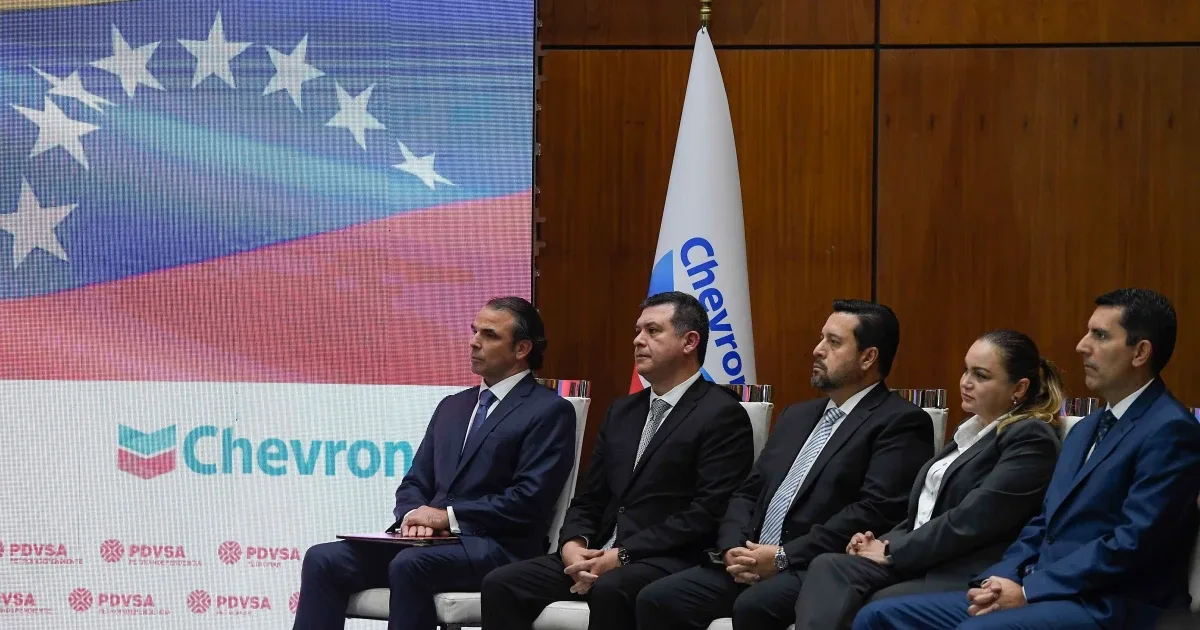
The U.S. administration has significantly escalated its pressure on Venezuela by canceling Chevron’s license to operate oil ventures in the country, cutting a crucial source of revenue for Nicolás Maduro’s government. This move reverses an earlier administration’s sanctions relief that had allowed Chevron to resume limited production in Venezuela under strict conditions.
This license revocation came amid a broader strategy to choke off Caracas’s oil income without direct military involvement. The Treasury Department issued a directive permitting Chevron to wind down its Venezuelan operations in an orderly fashion, effectively ending Washington’s temporary easing of restrictions designed to encourage democratic reforms.

The economic squeeze extends beyond Chevron’s activities. The White House unveiled plans to impose a 25% tariff on imports to the U.S. from any country still purchasing Venezuelan oil. This policy aims to isolate Venezuela’s oil exports internationally by turning other countries’ trade with Caracas into a financial risk.
Additionally, U.S. officials have linked Venezuela’s migration challenges to its economic and political crisis. They warned that failure to accept repatriated citizens could trigger further punitive sanctions against Caracas. This ties humanitarian concerns directly to the administration’s wider financial clampdown.
The sanctions campaign also targets Venezuela’s organized crime networks. The U.S. designated the Tren de Aragua criminal group as a foreign terrorist organization, sanctioning its leaders and framing the Maduro government as complicit in transnational criminal activity. This designation supports stronger legal grounds for continued sanctions and international pressure.
All these moves unfold amid a tense political scene. The presidential election, contested by Maduro and opposition figures, reinforced Venezuela’s internal divisions. Maduro’s controversial inauguration to a third term deepened conflicts with opposition leaders, some of whom have faced detention following protests against the government.
Experts highlight that Washington’s control of Venezuelan oil revenue through sanctions and licensing powers remains potent but legally complex and politically sensitive. The approach strategically relies on economic tools rather than military or direct government intervention, maintaining pressure on Caracas while limiting U.S. exposure.