

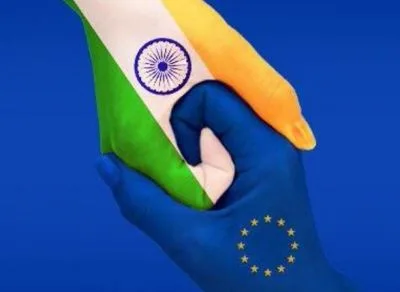
India has launched an ambitious effort to broaden its global trade footprint by negotiating free trade agreements (FTAs) across multiple strategic regions following its historic deal with the European Union. The country aims to deepen commercial ties with North and Latin America, Africa, the Gulf Cooperation Council, and Asia-Pacific economies, according to its chief trade negotiator.
Speaking at an event hosted by the Peterson Institute for International Economics, Darpan Jain, India’s lead negotiator for the EU-India Free Trade Agreement, emphasized that the country’s trade policy now focuses on extensive geographic coverage. Jain highlighted that India has secured agreements covering close to half of global trade and economic output through its deals signed over recent years and is shifting focus toward areas where its presence remains limited.

In North America, negotiations are underway with Canada, alongside initial talks with Mexico. Latin America is a crucial target, with India advancing agreements with Chile, Peru, and taking steps to expand its existing Preferential Trade Agreement with Mercosur. Jain referred to Latin America as a vital region for India’s increased trade engagement.
India is also enhancing ties with West Asia, building upon existing FTAs with the United Arab Emirates and Oman, while initiating discussions with Qatar, the Gulf Cooperation Council, and other states in the region. African markets remain a priority, as negotiations continue with the Southern African Customs Union and Kenya in efforts to widen economic collaboration across the continent.
In Asia-Pacific, India has established agreements with Japan, South Korea, Singapore, and ASEAN countries. The country recently completed FTAs with Australia and New Zealand, signaling a commitment to strengthening trade relationships in Oceania as well.
The EU-India trade pact, representing nearly two billion people, marks one of India's most significant bilateral agreements to date. Jain described it as reflecting a strong political dedication to expanding market access, integrating India further into global commerce, and removing barriers faced by its exporters.