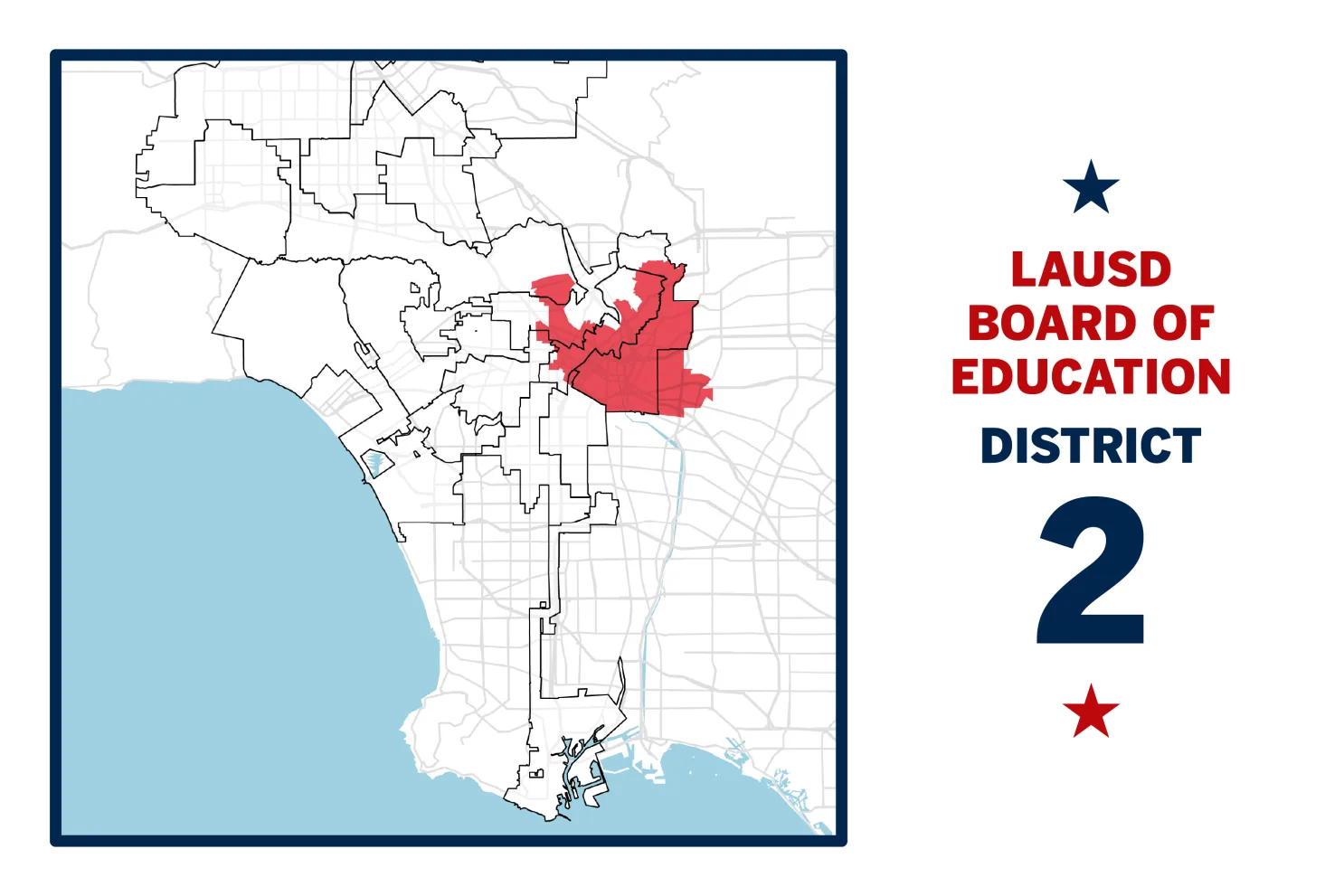
The race for the Los Angeles Unified School District Board of Education's District 2 seat reflects broader tensions facing the nation's second-largest school system, which serves about 390,000 students. Incumbent Rocío Rivas, 52, faces a challenge from Raquel Zamora, 44, a teacher and counselor, in a district that spans downtown Los Angeles and extends to neighborhoods including Boyle Heights, East L.A., Lincoln Heights, and Cypress Park.
The election occurs at a precarious moment for L.A. Unified. In mid-April, district officials averted a strike by agreeing to employee raises and reversing about 200 planned layoffs, commitments that will cost nearly $1.2 billion annually through new contracts with three unions, including the teachers union. Simultaneously, superintendent Alberto Carvalho remains on paid administrative leave following FBI raids of his home and office tied to a failed chatbot project. Carvalho has denied wrongdoing and expressed a desire to return to work. The board will ultimately decide whether to retain him or select a replacement if he cannot serve out his new four-year contract.

Rivas, who joined the board in 2022 after working as a senior policy deputy to then-Board President Jackie Goldberg, has earned endorsements from major Democratic groups and unions, including the powerful United Teachers Los Angeles. She supports Carvalho's continuation, stating that "as facts are presented, the Board will take appropriate action in the best interest of students." Zamora, who has worked in the district for 20 years as a teacher, attendance counselor, mental health therapist, and social worker, takes a harder line. She called for Carvalho's removal, saying the community "deserves full transparency and confidence in its leadership, and our students deserve a superintendent who can focus solely on their needs — without the cloud of federal scrutiny."
The candidates diverge sharply on school police. In 2020, the board cut school police funding by 35%. Rivas has supported activist calls for police elimination and now proposes modest additional reductions and reallocation. Zamora has aligned with pro-police parent organizers who collected more than 5,000 signatures to restore officers to campuses, supporting at least part-time police presence in middle and high schools—a position that could require budget increases.
On charter schools, Rivas maintains that traditional public school needs should take precedence, a position popular with teachers but contradicted by state law requiring equal treatment. Zamora adopts a middle position, framing charters and district programs as competing options that families should choose based on academic performance. Both candidates are Democrats and parents of L.A. Unified students. Standardized test scores have trended upward since the pandemic, though growth remains incremental. The district also faces declining enrollment, heightened federal immigration enforcement affecting attendance, and budget pressures that may force campus closures.