

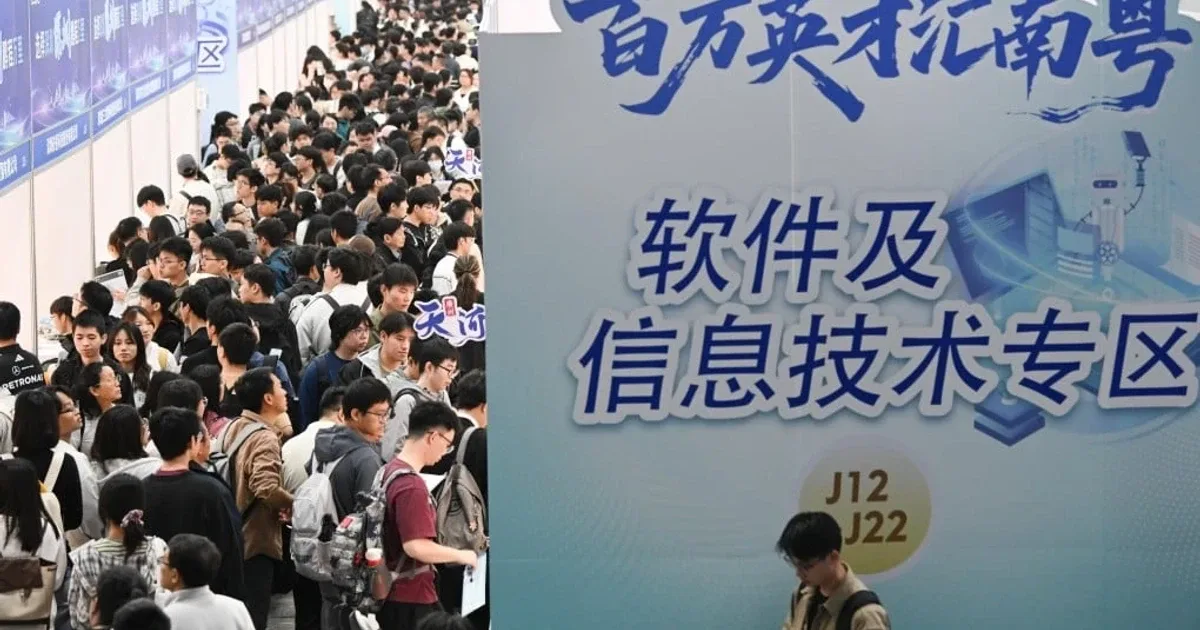
China is mobilizing a comprehensive strategy to maintain employment stability in the face of accelerating artificial intelligence adoption. With a record number of college graduates expected to flood the job market, authorities are emphasizing job creation and workforce transformation to counterbalance automation’s disruptive potential.
The State Council announced an employment-first plan spanning 2026 to 2030 that prioritizes steady job growth and the mitigation of large-scale unemployment risks. This initiative addresses projections of more than 12 million new graduates entering China’s workforce this year, alongside a substantial migrant labor force nearing 300 million.

In response to AI’s rising influence, which permeates sectors from manufacturing to services, Chinese officials have adopted a dual approach: expanding emerging digital and high-tech industries while upgrading traditional roles through retraining efforts. The Ministry of Human Resources and Social Security identified dozens of new occupations arising in recent years, with more than 20 directly linked to AI technologies. Each of these new job categories is expected to support hundreds of thousands of workers in early development phases.
Officials have openly described AI both as a driver of productivity and a potential catalyst for labor market shocks, underscoring the need for proactive policies. Human resources leaders voiced intentions to harness AI for creating new roles and enhancing job quality, focusing on innovation within the digital economy, high-end manufacturing, and modern service sectors.
This strategy reflects a broader governmental effort to manage technological transformation without sparking social instability. Inside China, reactions to AI’s workplace impact are mixed: while some embrace the efficiency gains supported by automation, others worry about job losses and reduced headcounts as companies automate routine tasks.
China’s model provides a valuable reference for other economies confronting the labor ramifications of AI. It suggests that without early investment in retraining and job creation, automation’s effects will extend beyond tech-centric urban areas, influencing factories, service jobs, and the next generation of job seekers worldwide.