

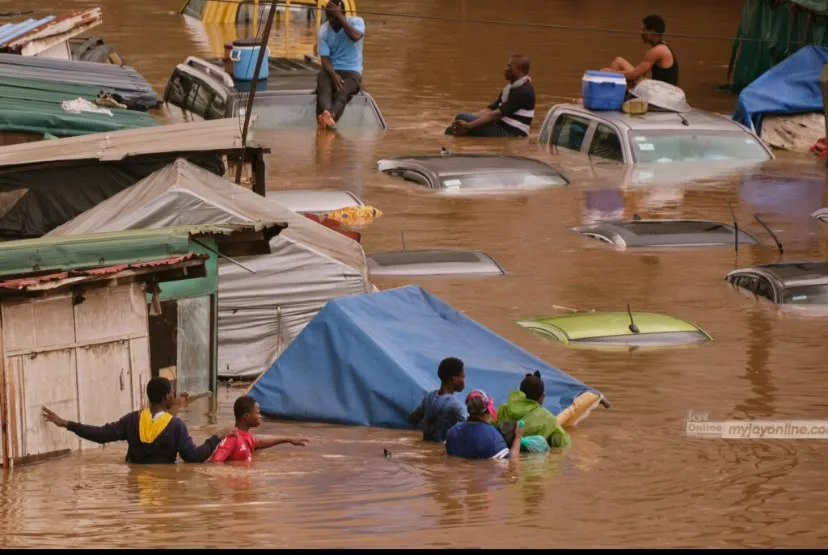
Ghana faces mounting challenges as its drainage infrastructure fails to cope with increasingly heavy and frequent rainfall caused by rising global temperatures. Experts emphasized during a recent climate forum that the flood crisis extends beyond blocked gutters and poor sanitation, directly linked to climate change’s impact on rainfall patterns.
Warmer atmospheric conditions allow more moisture to accumulate, leading to heavier downpours that overwhelm urban drainage networks, especially in the capital. The existing systems, designed for historical weather patterns, are now proving inadequate against the volume and intensity of modern storms, exacerbating flood risks across the country.

While long-standing issues like clogged drains, waste mismanagement, and poorly planned settlements persist, they now intersect with new climate-driven realities. This combination has led to submerged roads, damaged homes, disrupted businesses, and heightened vulnerability for thousands of residents during heavy rains.
Experts participating in the Loud and Green X Space event, hosted by JoyNews with Behind the Science and CDKN Ghana, argued that treating flooding as solely an engineering or sanitation problem overlooks the critical need to integrate climate adaptation into infrastructure and urban planning. Without this shift, Ghana risks greater economic losses, environmental degradation, and public health emergencies.
The panelists called for modernizing infrastructure to reflect current and future climate trends, underscoring the urgency of planning that prioritizes resilience to weather extremes. Their discussion highlighted the evolving nature of flood risks and the necessity for a coordinated response that combines scientific evidence with proactive urban development strategies.