

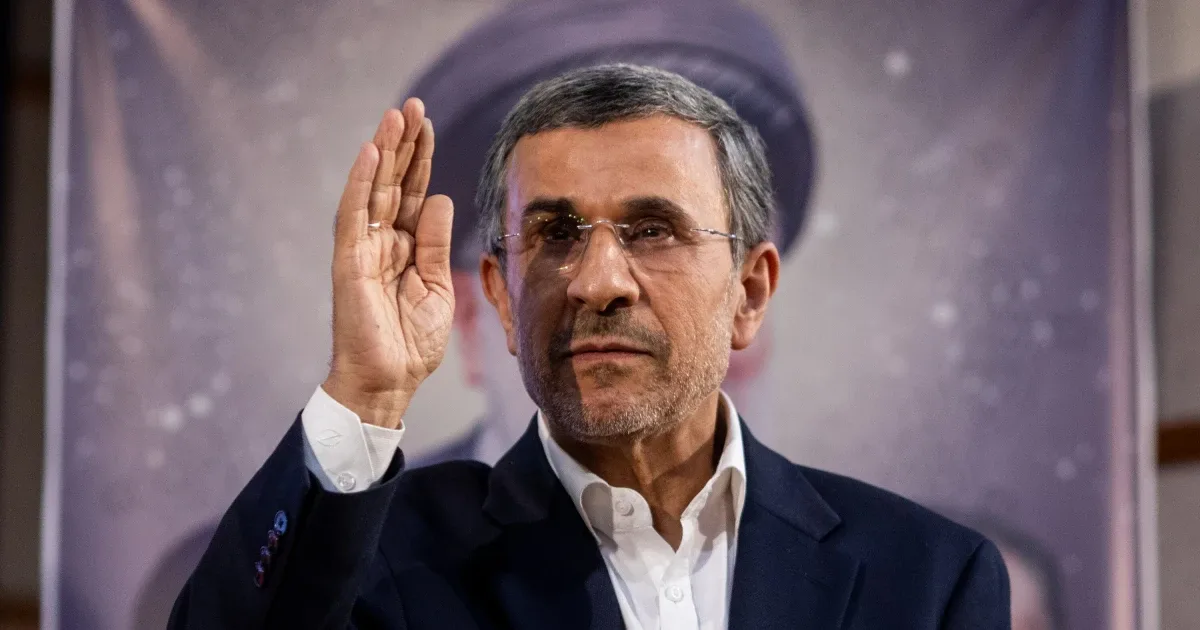
At the start of recent hostilities targeting Iran, Israel attempted a clandestine operation to relocate former Iranian President Mahmoud Ahmadinejad to a secure safe house, aiming to position him as a key figure in a regime change effort. This move emerged from years of attempts to cultivate Ahmadinejad as an intelligence asset within broader U.S.-Israeli strategies to destabilize Iran’s leadership from within.
Despite Ahmadinejad’s vocal anti-Israel and anti-American rhetoric during his presidency from 2005 to 2013, U.S. and Israeli officials regarded him as a viable alternative leader to replace Supreme Leader Ali Khamenei. However, Ahmadinejad’s political isolation within Iran complicated these plans. He had been barred from running for president in several election cycles and was effectively confined to his home under strict surveillance by the Islamic Revolutionary Guard Corps, solidifying his image as a dissident to the clerical regime.

During the initial phase of the conflict, an Israeli airstrike targeted the area near Ahmadinejad’s residence in Tehran’s Narmak district. The objective was not to assassinate him but to disrupt his security detail, facilitating his extraction for political purposes. The strike, however, either injured Ahmadinejad or further alienated him politically, causing the operation to collapse before it could proceed.
This attempt was part of a larger, multi-faceted approach involving airstrikes, covert operations, and the expectation that internal unrest, possibly driven by Kurdish groups or broader uprisings, might fracture Iran’s government. The plan sought to exploit Iran’s internal divisions to induce regime change, though the failure to secure Ahmadinejad underscored the difficulty of manipulating Iran’s complex political landscape.