

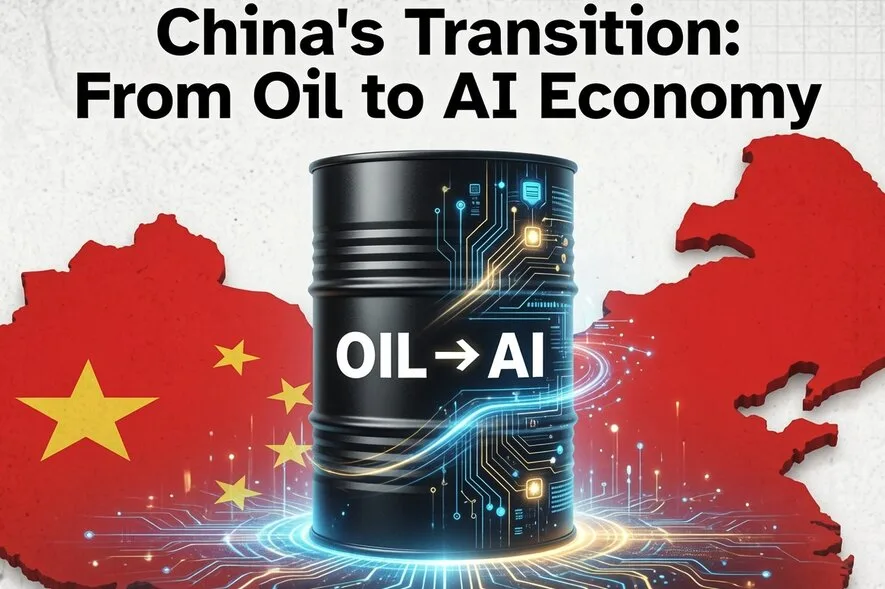
China’s crude oil imports fell dramatically from over 11 million barrels per day earlier this year to under 8 million barrels per day by late spring, marking the lowest import levels since 2018. This decline corresponds with the country’s lowest refinery operating rates on record, signaling a sustained reduction in crude demand rather than a short-term fluctuation.
This shift in oil consumption is partly by design and reflects broader structural changes in China’s energy landscape. The nation accumulated a vast strategic reserve of nearly one billion barrels of oil during previous years of relatively low prices. Consequently, continuing to purchase expensive crude at recent wartime prices would degrade the value of these stockpiles, prompting a deliberate cutback in imports.

More fundamentally, the decrease in oil reliance aligns with accelerated adoption of electric vehicles (EVs) and alternative energy sources. In May 2026, EVs accounted for nearly 63% of new car sales in China, pushing down gasoline demand by roughly 430,000 barrels per day. The growing EV fleet has already displaced over one million barrels of oil consumption daily, a trend expected to intensify further with expanding electrification in trucking and other transportation sectors.
China’s final energy consumption is increasingly dominated by electricity, which now comprises over a quarter of total energy use. This electricity is generated primarily from domestic sources, including coal, solar, wind, hydroelectric, and nuclear power, reducing the country’s exposure to imported fossil fuels. The strategic advantage is clear: sustained lower oil imports send a firm signal that energy supply disruptions or sanctions will have limited impact on Beijing.
Research from the Oxford Institute for Energy Studies models China’s crude requirements under current refinery run cuts, estimating that seaborne imports could stabilize around 8 million barrels per day for an extended period. Furthermore, refiners have optimized output toward diesel and naphtha, revealing vulnerabilities mainly in chemical feedstock supplies rather than fuel. Overall, China is expected to maintain oil imports significantly below pre-pandemic levels, with a continuing downward trajectory linked to economic shifts and intensified electrification.
The country’s future growth is centered not on traditional oil-intensive industries but on sectors fueled by electricity and technological innovation, such as data centers, semiconductor production, robotics, and artificial intelligence. These changes reflect demographic factors, including an aging population with reduced transportation needs, and national priorities that favor digital and green energy development.
China’s move from an oil-dependent economy to one focused on electricity generation from primarily domestic sources signals a significant evolution in global energy dynamics. While oil remains an important commodity, Beijing is treating it increasingly as a legacy input—one to be carefully stockpiled and leveraged for price advantages rather than a cornerstone of economic growth.