

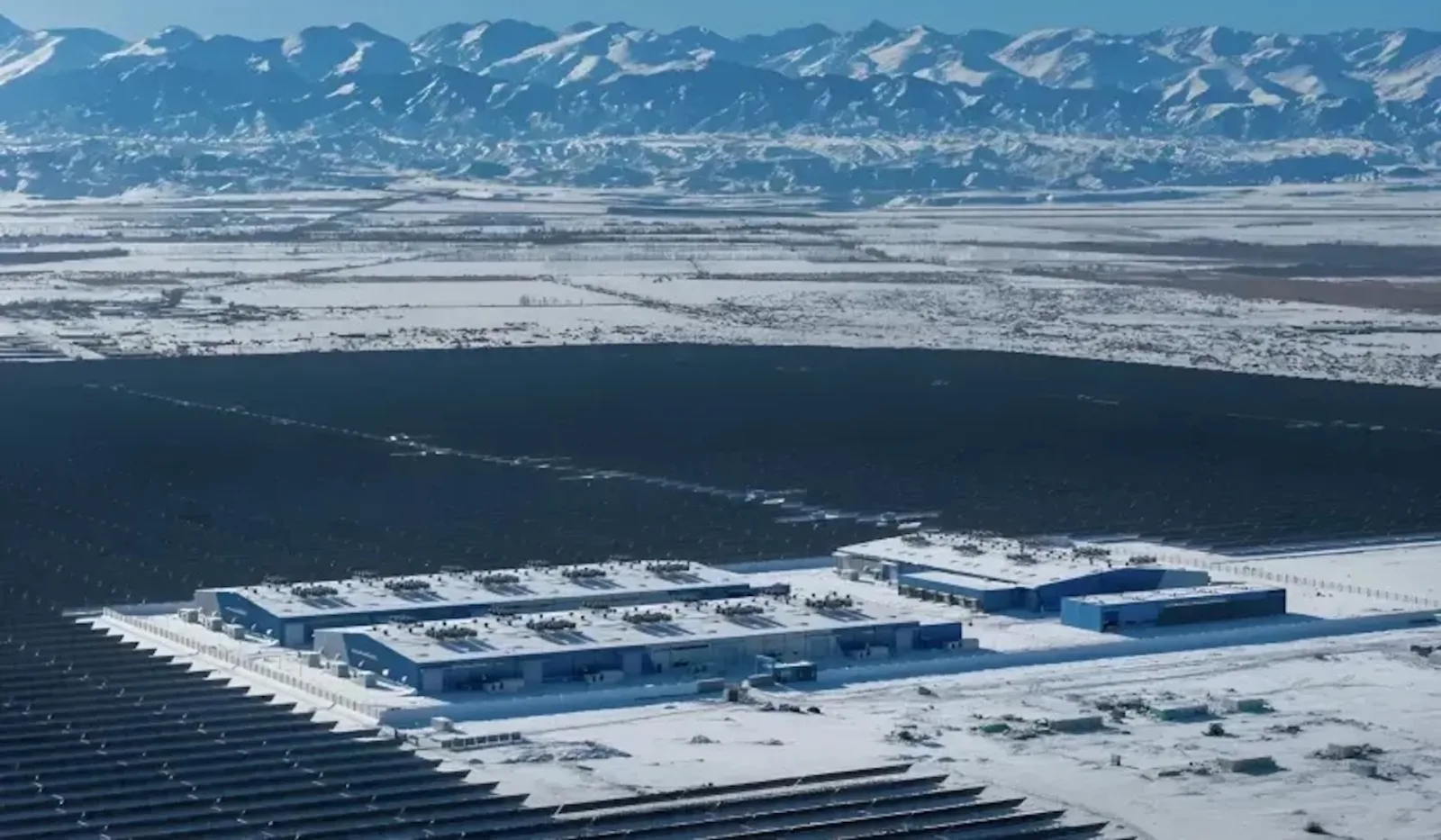
China’s latest solar power installation in the Gobi Desert breaks new ground by delivering continuous electricity well beyond sunset without relying on lithium-ion batteries. The 1-gigawatt Hami hybrid solar project combines conventional photovoltaic panels with a concentrated solar power (CSP) system that stores heat in molten salt, enabling it to generate power throughout the night.
The facility pairs 900 megawatts of standard solar panels with a 100-megawatt CSP system featuring a linear Fresnel reflector design. This setup uses hundreds of thousands of flat tracking mirrors to focus sunlight onto absorber tubes, heating molten salt to temperatures near 550 degrees Celsius. The stored thermal energy then drives steam turbines after dark, sustaining grid power for around eight hours.

Operational as a commercial trial in Xinjiang, the project could produce over two terawatt-hours annually, enough energy for nearly 830,000 homes. By providing reliable post-sunset power, it addresses a critical challenge for solar energy: maintaining grid stability during evening demand peaks without turning to fossil fuels or expensive battery banks.
Typically, solar power generation peaks under daylight, but energy demand surges when people return home and use electricity for lighting and appliances. This imbalance often requires rapid, carbon-intensive responses from gas plants. The Hami plant’s thermal storage approach offers an alternative, potentially lowering reliance on fossil fuel peaking plants and reducing associated emissions and pollution.
In addition to its innovative energy storage, the plant takes advantage of the Gobi Desert’s abundant sunlight and connects to extensive transmission networks, delivering clean energy across long distances to populated regions. The project aims to cut approximately 1.63 million metric tons of CO2 emissions annually, supporting China’s climate targets.
The project’s director highlighted the system’s ability to provide stable, non-stop power as a major commercial milestone for solar technology. Yet, energy analysts advocate caution, noting that scaling thermal storage cost-effectively remains a challenge for widespread adoption.