

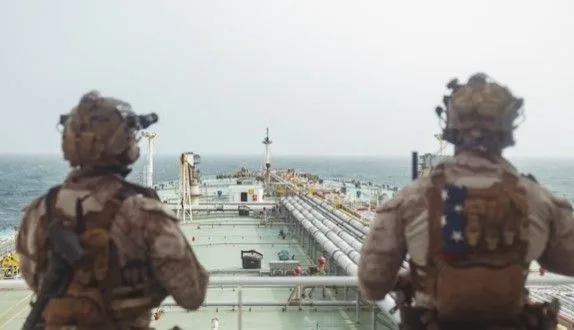
US forces have actively prevented several commercial vessels from breaching a naval blockade imposed on Iranian ports, according to the US Central Command (CENTCOM). The intervention included redirecting three ships, disabling one that ignored warnings, and boarding another for inspection to enforce the blockade.
The blockade aims to restrict shipping between Iranian ports and international waters, particularly across the Gulf of Oman and the Strait of Hormuz, a critical maritime chokepoint for global oil transit. CENTCOM highlighted that despite these measures, the surrounding waters remain open to international shipping except for vessels attempting to violate the US-imposed blockade.

One notable incident involved a ship flagged in Curacao, named M/T Belma, which disregarded multiple warnings and was targeted by US forces. The vessel was disabled after a US aircraft fired missiles into its smokestack, preventing it from sailing toward Kharg Island, an important Iranian port. This marked a significant enforcement action as the ship no longer transits toward Iran.
In addition to these maritime actions, US forces have conducted a series of strikes against Iranian military targets believed to threaten maritime traffic. These operations occurred over consecutive days and included multiple waves of missile strikes aimed specifically at capabilities endangering safe navigation through the Strait of Hormuz.
US Marines from the 11th Marine Expeditionary Unit carried out a boarding operation aboard M/T Wen Yao in the Gulf of Oman to verify compliance with the blockade. This underscores a hands-on approach to enforcing the maritime restrictions and ensuring that vessels adhere to the blockade's terms.
The naval blockade and related military actions resumed following a declaration by the US President to end a previous ceasefire agreement with Iran. These moves form part of a wider strategy to limit Iran’s maritime activities and apply pressure through control of shipping lanes critical to its economy and regional influence.