

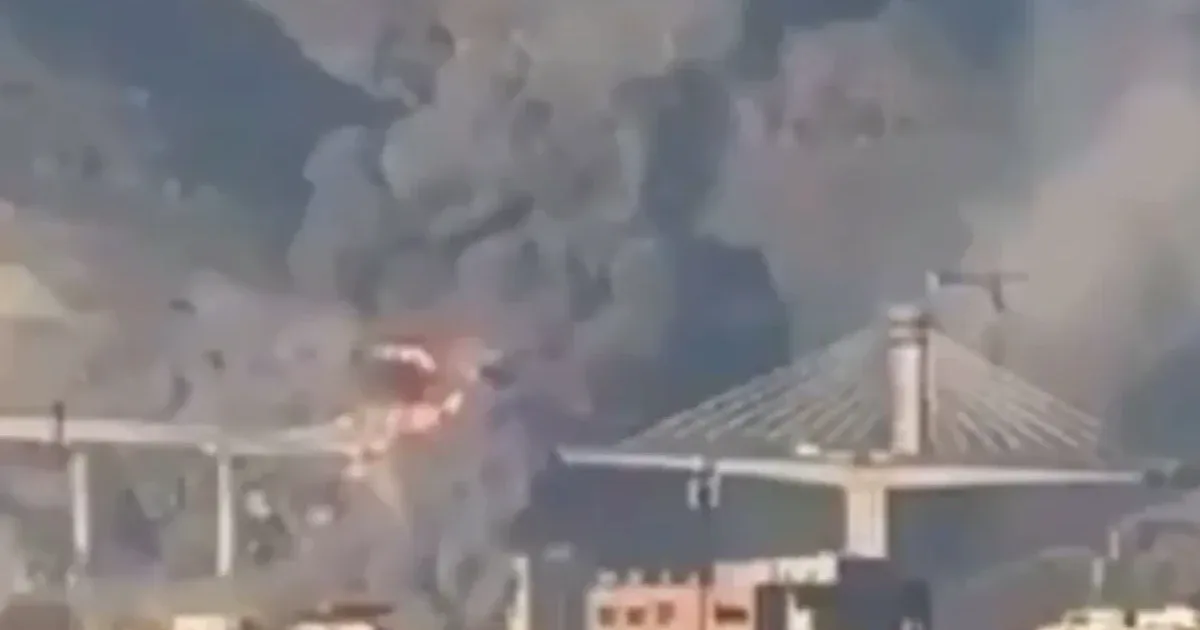
The United States has expanded its aerial campaign against Iran for a sixth consecutive night, targeting critical infrastructure including an airport, bridges, and communication towers. These strikes mark a significant escalation beyond purely military facilities, focusing increasingly on the infrastructure that supports Iran’s economy and daily civilian life.
This recent wave of attacks follows a prior series that began earlier in the month, collectively hitting over a hundred strategic sites. The broadening scope includes bridges, an island, and tanker routes to important oil ports, signaling a potential shift from limited retaliation to a sustained campaign aimed at pressuring Tehran on multiple fronts. Reports indicate the operations are linked to a decision by the US administration to intensify pressure on Iran by disrupting key logistical and economic nodes.

In response, Iran has strongly condemned the strikes, describing them as attacks on civilian infrastructure that will not force its capitulation. The Iranian Revolutionary Guard has claimed retaliatory strikes against US positions in the region, and Tehran has warned it may escalate by blocking vital shipping lanes, such as the Strait of Hormuz, a critical maritime chokepoint for global oil shipments.
This escalation raises concerns about the widening of the conflict beyond airstrikes within Iran's borders. Analysts note that any Iranian move to restrict shipping routes or attacks targeting US forces and allies in the Gulf, including Bahrain and Kuwait, would represent a significant intensification that could trigger a broader regional war.
The sustained nightly strikes and reciprocal threats suggest that prior ceasefire mechanisms may be unraveling, with neither side currently showing signs of de-escalation. The evolving conflict, moving from targeted military sites to essential infrastructure and maritime access, underscores the risk of prolonged instability in the Gulf region and its global economic repercussions.