

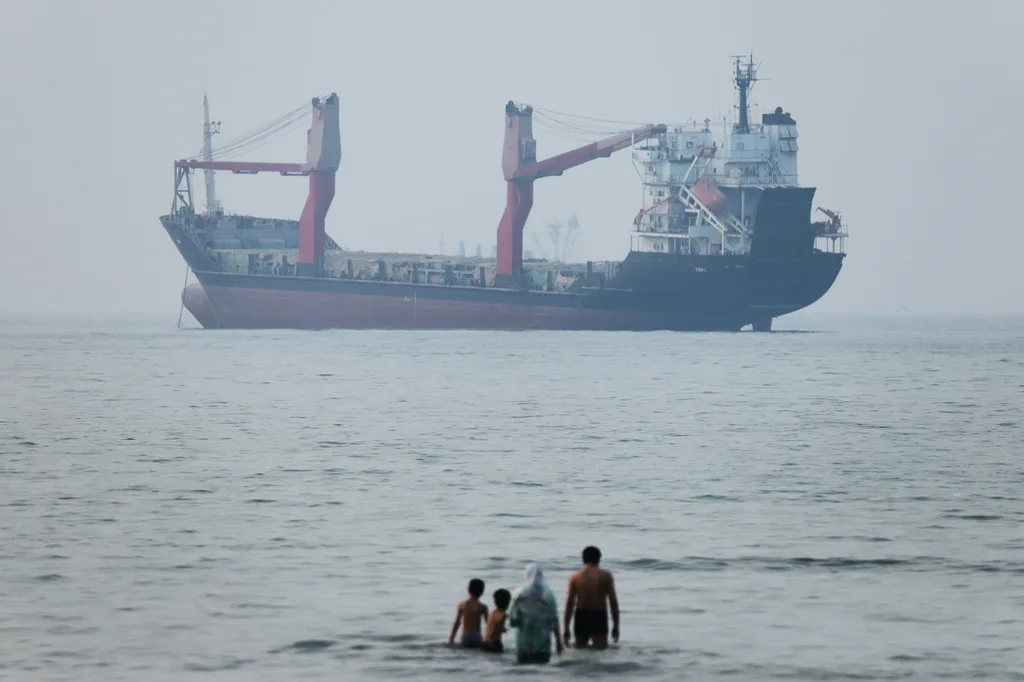
The Strait of Hormuz, a pivotal maritime passageway for global oil and gas shipments, remains at the center of escalating tensions between the United States and Iran following a weekend marked by coordinated attacks across the region. A recent Iranian strike on a container ship near Oman reignited confrontations, underscoring the strategic importance of the waterway and the fragile nature of the ongoing interim agreement between the two powers.
The United States military reported launching strikes on dozens of Iranian targets, including air defense systems, missile and drone equipment, radar sites, and small boats, aimed at curbing Tehran's ability to disrupt shipping lanes. Central Command emphasized that despite Iranian claims, the Strait of Hormuz is an international corridor vital to global trade and not under Iran’s exclusive control.

In response, Iran’s Revolutionary Guard, responsible for the country’s ballistic missile forces, vehemently rejected the US assertions, framing the strait as sovereign territory and condemning what it called illegal interference by American forces. The unfolding conflict has triggered missile alert sirens in Bahrain, home to the US Navy’s 5th Fleet, and defensive actions by Kuwait, both countries targeted by attacks linked to the Iranian strikes.
The preceding attacks affected a broad swath of countries in the Gulf region, including Bahrain, Kuwait, Qatar, Jordan, and Oman. Notably, Oman—long recognized as a diplomatic intermediary between Tehran and Western nations—criticized Iran following a missile strike within its territorial waters near the strait, an area crucial for maritime navigation.
Alongside maritime clashes, regional instability deepened with a drone attack on a base belonging to the armed wing of the Kurdistan Freedom Party, an Iranian Kurdish opposition group operating from northern Iraq. This incident further illustrates the complex web of actors and conflicts intertwined with the standoff over the Strait of Hormuz.
The current tension unfolds almost halfway through a 60-day interim agreement intended to pave the way for permanent peace negotiations. However, the renewed hostilities fuel fears among global leaders that a return to full-scale warfare could have severe repercussions for international energy markets and regional stability. United Nations Secretary-General António Guterres warned that such a scenario would have catastrophic impacts, emphasizing the urgent need to preserve diplomatic channels amid rising violence.