

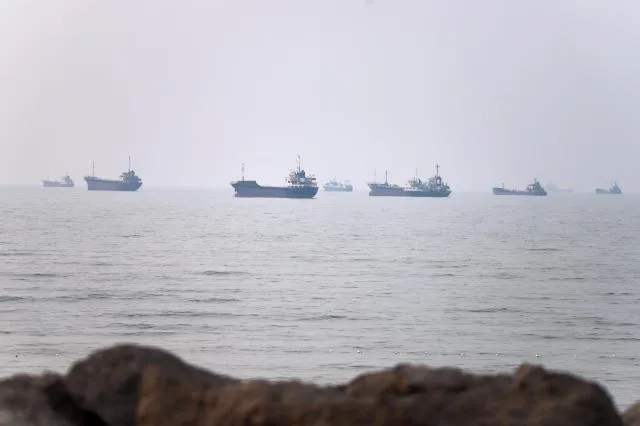
A tanker ignited after a projectile struck its port side while navigating through the Strait of Hormuz near Oman, according to the British military. The incident marks the latest attack targeting vessels in this vital waterway, which handles a significant portion of the world’s oil and natural gas trade during peacetime.
The UK Maritime Trade Operations center reported that the vessel was moving southbound toward the Gulf of Oman when it was hit near Limah, Oman. Despite the fire, authorities confirmed no environmental damage occurred, and an investigation is underway. The attack’s timing coincides with heightened regional tensions fueled by Iran’s recent warnings enforcing strict control over shipping lanes in the strait.

Iran’s joint military command instructed all oil tankers to adhere to specific routes approved by Tehran, threatening immediate and forceful responses against any deviation. This stance challenges the long-established navigation freedoms in the area, creating friction with the United States and Gulf Arab states who refuse to recognize Iran’s authority over these maritime passages.
In parallel, Iran and the U.S. had agreed on an interim arrangement allowing vessels to transit without paying fees for a limited period. However, Tehran insists on controlling shipping routes and imposing passage charges, a move that disrupts decades of maritime practice in the Strait of Hormuz.
The attack unfolded as Iran mourns Ayatollah Ali Khamenei, its late Supreme Leader, with burial ceremonies underway in the religious city of Qom. Public displays of grief reportedly include calls for violent retaliation against the U.S., complicating diplomatic efforts. Negotiations aimed at fully reopening the strait, curbing Tehran’s nuclear ambitions, and bringing an end to the ongoing conflict have stalled amidst these developments.
Previous attacks in the region have escalated into tit-for-tat military actions, triggering concerns over a broader confrontation involving Gulf Arab allies and U.S. forces. With ongoing disputes over control of the Strait of Hormuz, the strategic chokepoint remains a focal point of regional and international security challenges.