

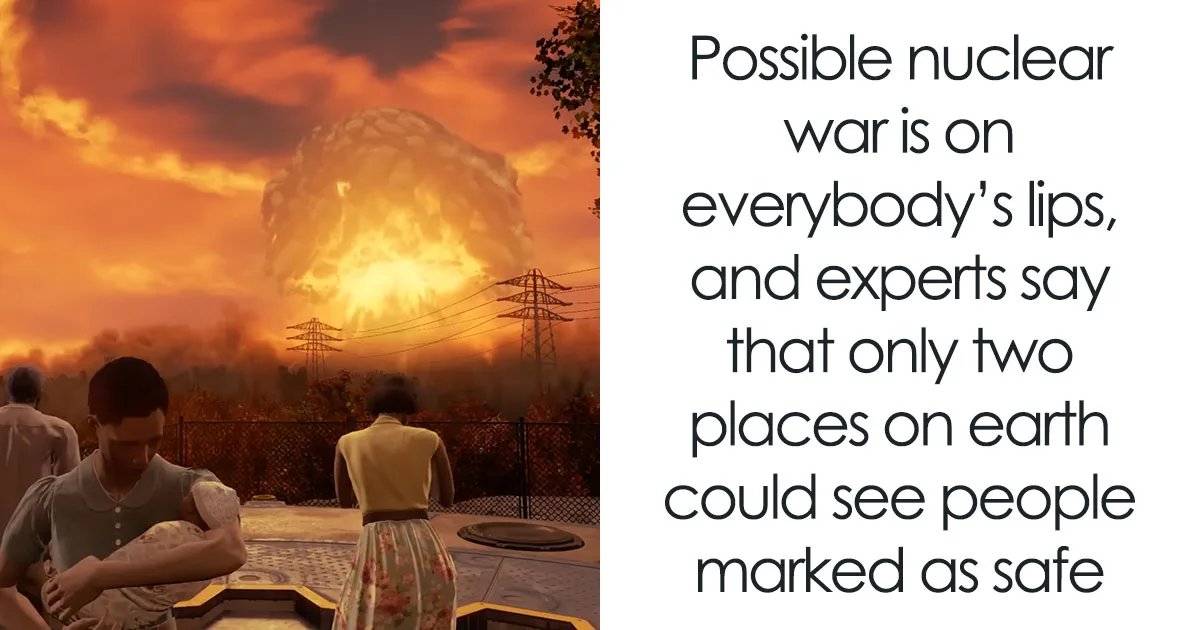
Scientists have conducted detailed simulations to understand the devastating impact of a full-scale nuclear war, concluding that the vast majority of the world’s population would perish. The grim findings highlight that only two countries might remain largely untouched while billions face immediate or long-term consequences.
The study, published in the journal Nature, analyzed the potential fallout of detonating the approximately 12,000 nuclear warheads globally. It estimates that about five billion people—roughly 60% of the current population—would die either instantly from the blasts or subsequently due to nuclear winter and famine. The initial explosions could generate temperatures up to 100 million degrees Celsius, far hotter than the sun’s surface, annihilating entire cities in fireballs and shockwaves.

This scenario emerges amid escalating geopolitical tensions involving nuclear-armed states in the Middle East and South Asia. Recent missile exchanges between the United States, Israel, and Iran, along with Taliban incursions into nuclear-capable Pakistan, underscore the potential for conflict in volatile regions. The world’s nuclear arsenals remain distributed among nine nations, all theoretically capable of launching devastating strikes.
Beyond the immediate destruction, the environmental impact would severely compromise agriculture worldwide. Radioactive fallout would damage the ozone layer, leading to uninhabitable regions and prolonged scarcity of food. This cascade effect threatens to collapse global food production, driving widespread famine in the aftermath.
The scientific observations align with scenarios mapped by defense experts and investigative authors who warn of the scale of human and ecological devastation. While nuclear war remains unlikely, its consequences are far from theoretical, underscoring the urgency of diplomatic restraint and disarmament efforts.