

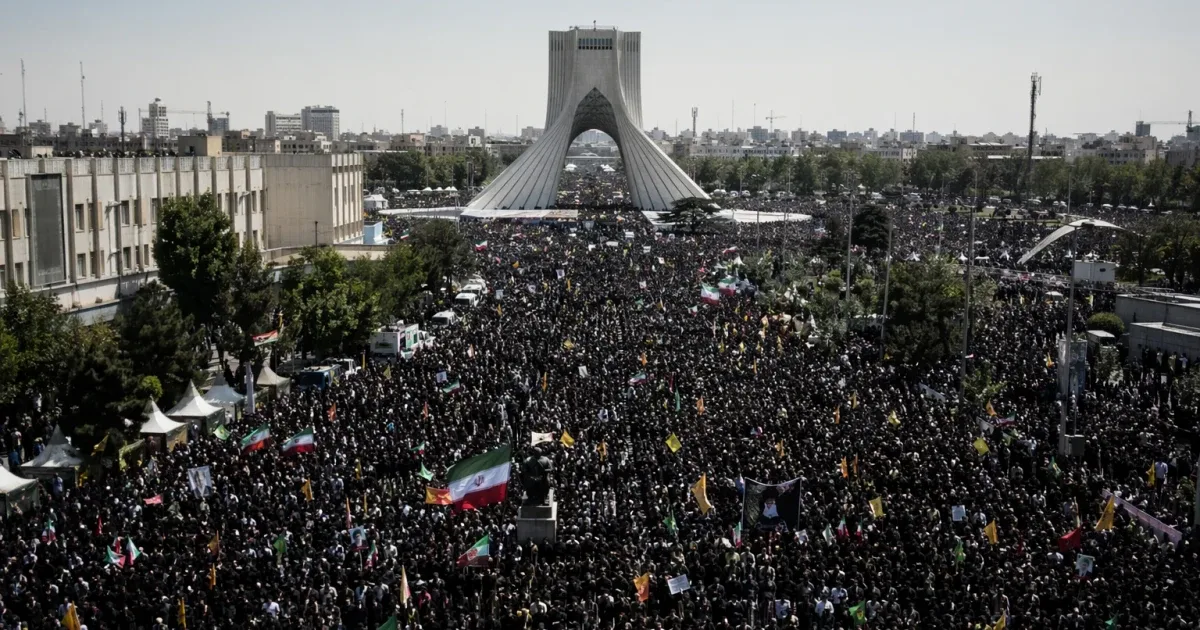
Massive crowds filled key religious and political centers in Iran and Iraq during the burial rites of Ali Khamenei, the country’s supreme leader who died following a targeted airstrike. The final interment took place at the Imam Reza Shrine, concluding a seven-day procession that began in Tehran and passed through significant Shia cities, including Qom, Najaf, and Karbala.
The funeral procession occurred amid a fragile ceasefire and renewed military exchanges between Iran, the United States, and Israel, elevating the event beyond a traditional mourning ritual. Iranian officials characterized the gatherings, especially the one in Tehran, as possibly the largest public assembly in the nation’s modern history, with state media reporting diplomatic representation from over 100 countries. The extensive turnout served as a visible assertion of state resilience and continuity despite recent conflict setbacks.

In Iraq, the funeral carried symbolic weight as well, with the Popular Mobilisation Forces noting that millions participated in the procession in Najaf alone. The rallies extended the mourning campaign’s influence across national borders, reinforcing an ideological and political bond within major Shia centers. Throughout the ceremonies, mourners displayed Iranian flags, portraits of Khamenei, and revolutionary slogans, underscoring the leader’s enduring association with the political structure he shaped.
The burial marked the first significant public event under Mojtaba Khamenei, Ali Khamenei’s son and declared successor, marking a critical moment in the regime’s leadership transition. His public emergence signaled the consolidation of control over the state apparatus amid ongoing regional instability. Observers noted that the funeral was not only a manifestation of grief but also a stage demonstrating how the government aims to sustain legitimacy and authority after suffering military and diplomatic pressures.