

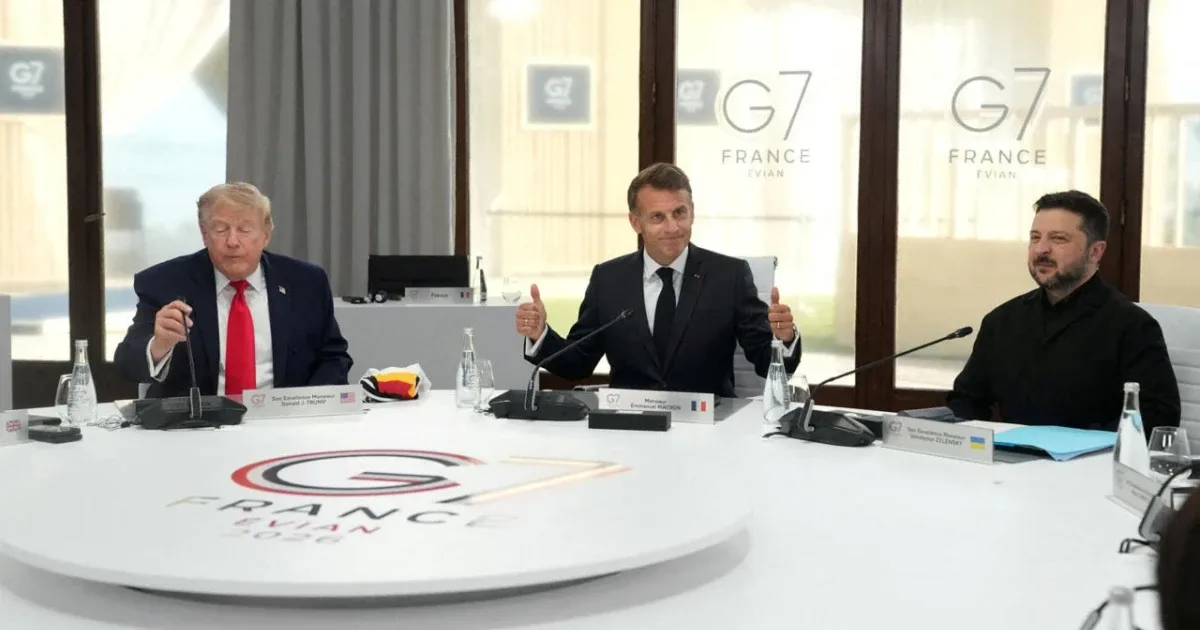
The conflicts involving Iran and Ukraine reveal the complex reality that military force, often pursued as a means of leverage, can quickly run into limits when political objectives remain unfulfilled. Leaders in both crises have shown contrasting but equally problematic approaches, as military pressure neither guarantees control nor peace.
In the case of Iran, signals of de-escalation have rapidly shifted back to confrontation. At a recent international summit, expressions of withdrawal gave way to renewed threats and military strikes following attacks near critical maritime routes. This cycle illustrates how fragile efforts at disengagement can be, especially when incidents threaten vital shipping lanes, driving parties back toward forceful responses.

Meanwhile, the Ukrainian conflict demonstrates a different dynamic in leadership response. Russian resistance to negotiations persists despite growing battlefield wear and mounting losses. Attacks on key infrastructure have hardened the Kremlin’s stance rather than pushing it toward compromise, underscoring how a war tied to political status and domestic power considerations complicates diplomatic alternatives. The ongoing drone strikes appear to have intensified rather than softened the conflict, making escalation the default option.
Both scenarios highlight divergent strategies yet reveal shared constraints: one leader oscillates between withdrawal and escalation, creating volatility and uncertainty, while the other maintains a rigid refusal to compromise, narrowing negotiation opportunities. In neither case does military pressure translate smoothly into the political outcomes the leaders seek.
As the war in Ukraine extends beyond its fourth year, the battlefield increasingly fails as an effective instrument for political resolution. The limits exposed by these conflicts serve as a cautionary reflection on how military force alone struggles to resolve complex geopolitical crises where political will, negotiation, and strategic patience play indispensable roles.