

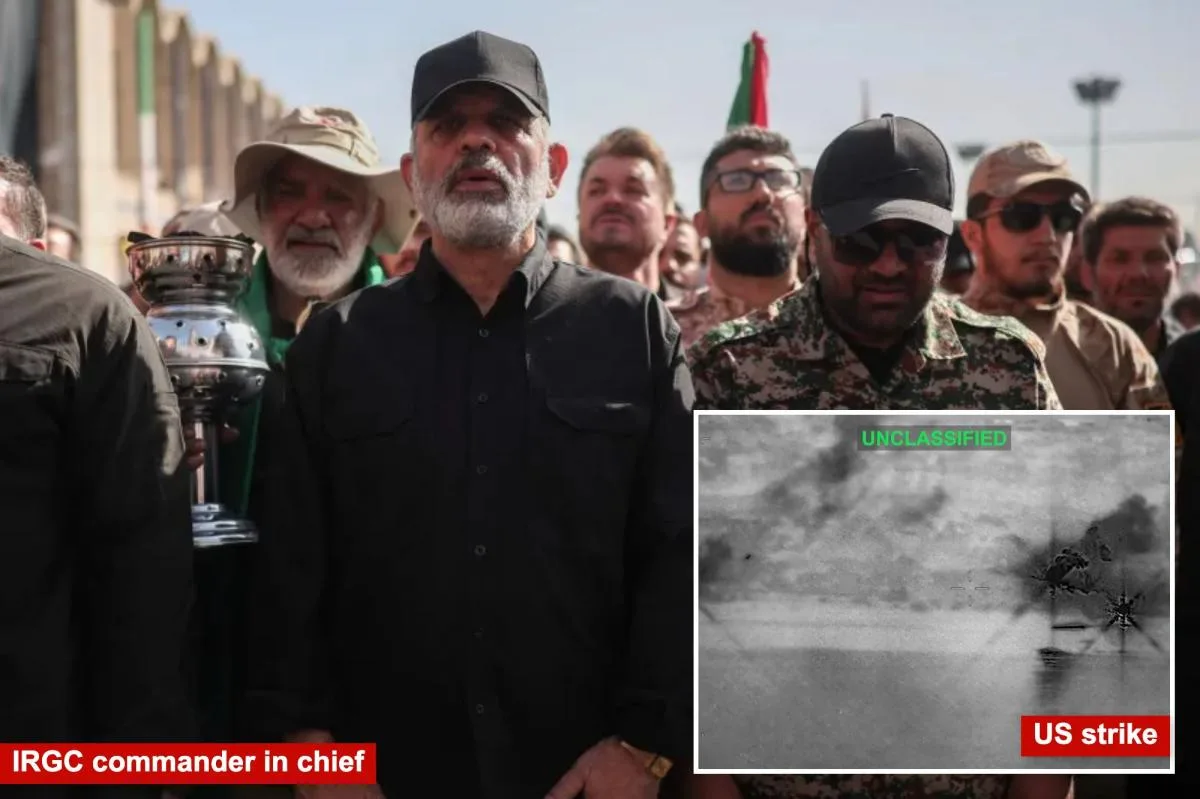
In a significant escalation of tensions in the Middle East, Iran’s Islamic Revolutionary Guard Corps (IRGC) conducted coordinated missile and drone strikes against US military installations in Bahrain and Kuwait. The attacks targeted Bandar Salman in Bahrain’s naval district and the Ali Al Salem Air Base in Kuwait. Kuwaiti forces reported engaging hostile missiles and drones, while air raid sirens were activated in both countries as a precaution.
The IRGC also shot down an American MQ-9 drone during the operation, which they said was interfering with their mission. These attacks followed a fresh wave of US military strikes against Iranian positions in response to recent assaults on tankers transiting the Strait of Hormuz. The strikes aimed to punish Iran for violating a fragile cease-fire by targeting more than 60 small IRGC boats, according to the US Central Command.

The US action coincided with Washington revoking Iran’s oil export license and targeting Iranian military infrastructure, including air defenses, coastal surveillance, surface-to-air missile sites, and drone launch areas. Despite multiple explosions reported in Iran’s main oil-exporting hub on Kharg Island as well as Qeshm Island and southern port cities, US Central Command did not confirm these locations as strike targets. Iranian state media noted damage to commercial piers and fishing facilities in Sirik and Bandar Abbas, with several injuries caused by shrapnel from the attacks.
Iran’s top military command labeled the US strikes as blatant aggression and promised a crushing response, reaffirming Tehran’s stance against US interference in the Strait of Hormuz. Iranian parliament speaker Mohammad Baqer Qalibaf accused the US of breaching the cease-fire agreement, citing renewed sanctions and Israeli attacks in the region as further provocations. He emphasized Iran’s refusal to yield under pressure and declared the end of what he called an era of bullying.