

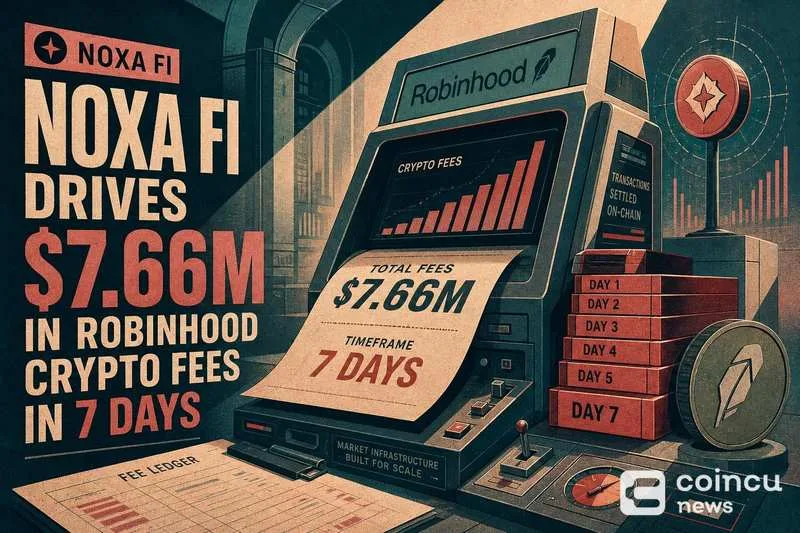
Noxa Fi played a central role in driving $7.66 million in crypto transaction fees on the Robinhood blockchain in just one week. This figure underscores the rapid increase in trading volumes tied to the launch and exchange of speculative tokens within Robinhood’s crypto ecosystem.
The Robinhood chain’s fee revenue surged as traders engaged in high volumes of token and memecoin transactions through Noxa Fi, a platform that operates as a trading interface and token launchpad on this blockchain. These fees came from a tiered structure where transaction costs vary by trade size and asset type, accumulating rapidly amid intense on-chain activity.

The spike highlights the Robinhood chain’s emergence as a competitor to existing Layer 2 networks such as Base, fueled largely by memecoin trading and tokenized stock transactions. Early users sought new speculative token launches, triggering fee patterns similar to those observed on recently launched blockchains. This strategic phase of user engagement has placed Robinhood’s crypto operation on a significant growth trajectory.
On-chain analytics sourced from platforms like Dune indicate that the trading activity was concentrated in bursts rather than spread evenly over time. Noxa Fi’s role resembles that of platforms like pump.fun on Solana, where each new token creation and subsequent trades contribute to fee revenue streams. This synergy has funneled user demand directly into Robinhood’s fee-generation infrastructure.
The volume of fees generated within this seven-day span offers an important benchmark for Robinhood’s crypto ambitions. If sustained, the platform’s fee revenue could translate into hundreds of millions annually, marking a substantial source of income beyond traditional brokerage commissions. As Robinhood navigates evolving U.S. regulatory environments, these blockchain-level fees introduce a new monetization model for its expanding crypto business.