

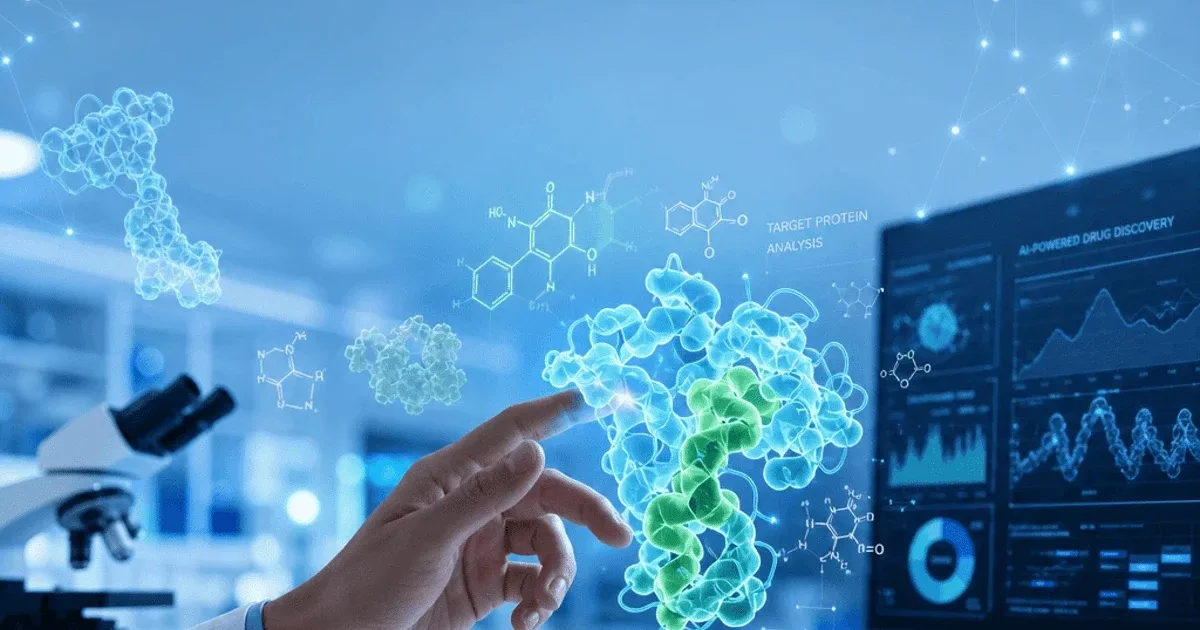
A drug discovery startup led by an OpenAI researcher is negotiating to raise a substantial investment round that values the company at $2 billion before launching any drugs. This positions the firm among the most aggressively valued in biotech, signaling strong investor confidence in the potential of AI platforms to transform pharmaceutical research and development.
The startup’s backers include Lightspeed Venture Partners, involved in talks to lead a financing round expected to reach $200 million. This surge in capital reflects a broader wave of investor enthusiasm for AI applications in biology and medicinal chemistry, bolstered by OpenAI’s recent advances in research-driven AI models such as GPT-Rosalind and the LifeSciBench benchmarking platform. These tools are designed to accelerate early-stage drug research by improving target identification and experiment design.

Miles Wang, a researcher with OpenAI’s Reinforcement Learning team, is spearheading the initiative. Wang’s work focuses on enhancing AI’s scientific reasoning and alignment capabilities, aiming to develop a platform that can deliver scalable improvements throughout the drug development pipeline. The goal is to move beyond isolated drug searches and create a technology that supports consistent, efficient discovery processes from target selection to preclinical testing.
The excitement around AI-driven drug development has translated into significant venture capital inflows. According to PitchBook data, funding for AI in drug discovery surged to $2.7 billion in the first three quarters of 2025 alone. Market analysts estimate that AI and machine learning technologies in drug discovery generated about $11 billion in financing across hundreds of investment rounds that year, highlighting the growing economic influence of AI in life sciences.
However, significant challenges remain. Despite the investments, no drugs generated entirely through AI have secured regulatory approval. Analysts emphasize ongoing hurdles such as limited data quality, bottlenecks in laboratory workflows, and the inherently lengthy and uncertain drug approval process, which typically spans a decade or more. Investors remain cautiously optimistic but watch closely for tangible progress as AI transitions from promising models to clinically viable therapies.
The rapid rise in valuations seen in AI-first drug startups is exemplified by Chai Discovery, which recently closed a $400 million funding round valuing the company at $3.8 billion. This illustrates how quickly the market rewards firms that position themselves at the frontier of AI-enabled pharmaceutical innovation, especially those founded by researchers with strong AI and scientific credentials.
For the OpenAI-backed startup to justify its high valuation, it must demonstrate that AI-driven improvements in biological understanding and chemical experimentation can consistently lead to promising drug candidates. Success will depend on translating early computational advances into robust, reproducible outcomes in real-world pharmacology and clinical testing.