

The European Parliament’s recent decision to reject a regulation that would have excluded soy-based biofuels from renewable fuel classifications by 2030 has significant trade implications. This reversal puts the EU at risk of facing substantial annual sanctions from Indonesia and Malaysia, two of the world’s largest palm oil producers.
These countries have warned the EU of potential retaliatory penalties exceeding $5.6 billion annually over the bloc’s failure to update laws addressing high deforestation-risk biofuels. The threat arises from a prior World Trade Organization (WTO) ruling that upheld the EU’s phase-out of palm oil biofuels under conditions requiring a scientifically consistent approach to identifying feedstocks that contribute to deforestation.

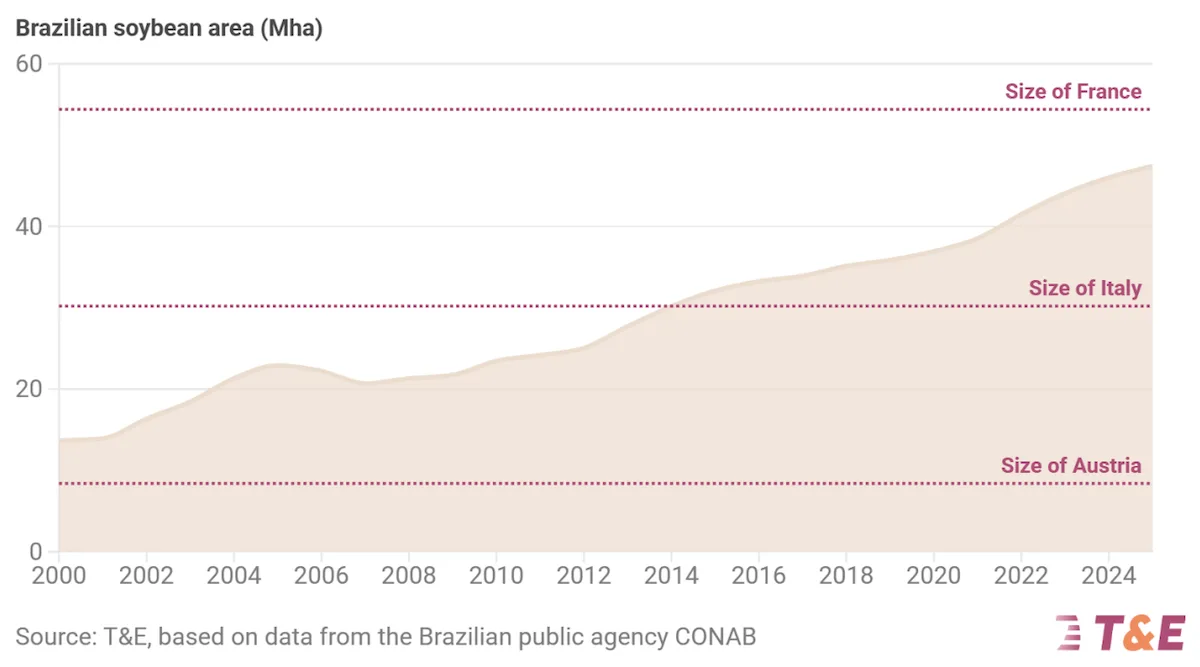
By maintaining soy biofuels as renewable despite their well-documented links to deforestation, the EU no longer meets this WTO standard, potentially inviting litigation and trade disputes. Soy cultivation, particularly in regions like Brazil’s Amazon rainforest and Cerrado savannah, drives large-scale land clearance and environmental degradation.
Environmental groups have criticized the Parliament’s vote as influenced by intensive lobbying from agricultural and bioenergy sectors seeking to preserve soy biofuel markets. They argue that treating soy as a sustainable alternative to fossil fuels ignores its environmental footprint and impacts on climate and food security.
Several EU member states, including France, the Netherlands, Denmark, and Belgium, have already begun phasing out soy biofuels from their national renewable energy targets, emphasizing a science-based approach to mitigating deforestation-related risks.
Without unified EU action to restrict high-risk biofuel feedstocks like soy, the bloc may encounter increasing tension in global trade relations and challenges in meeting its climate and sustainability commitments.