

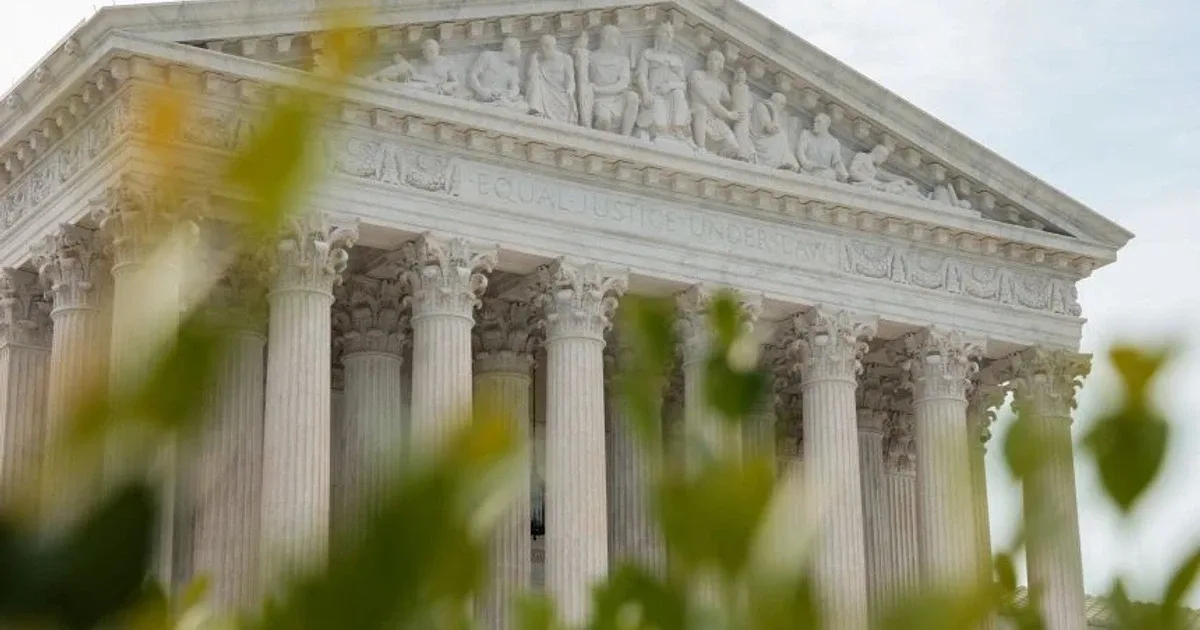
The Supreme Court has significantly expanded presidential power to remove federal regulators by ruling that the president can fire members of many independent agencies without cause. In a major shift, the court overturned long-standing protections that limited the president’s ability to dismiss commissioners on multi-member regulatory boards, impacting agencies responsible for consumer protection, labor, and workplace safety.
This decision came in a 6-3 ruling centered on the Federal Trade Commission, where the court allowed the removal of a Democratic commissioner despite previous legal safeguards meant to ensure agency independence. The ruling effectively reversed a 1935 precedent that had shielded such agencies from presidential firing at will, broadening executive control over roughly two dozen federal regulatory bodies.

However, the court drew a firm line when it came to the Federal Reserve. In a separate 5-4 ruling, the justices blocked the president’s attempt to remove a Federal Reserve governor midterm, maintaining the central bank’s traditional immunity from dismissal without cause. This decision upheld the Federal Reserve’s independent status, which is widely seen as critical to maintaining stable monetary policy free from day-to-day political influence.
The justices distinguished the Federal Reserve as a unique institution with a special constitutional status, unlike other independent agencies whose commissioners can now be dismissed more easily by the president. This carve-out preserves the Fed’s role in setting interest rates and overseeing the financial system, which directly affects inflation, borrowing costs, and economic confidence.
The ruling signals a recalibration of power between the executive branch and federal agencies, granting presidents more direct influence over regulatory enforcement across a broad range of policy areas while safeguarding the central bank’s autonomy. Market observers have noted the importance of Fed independence for economic stability, even as the broader regulatory landscape moves more firmly under presidential control.