

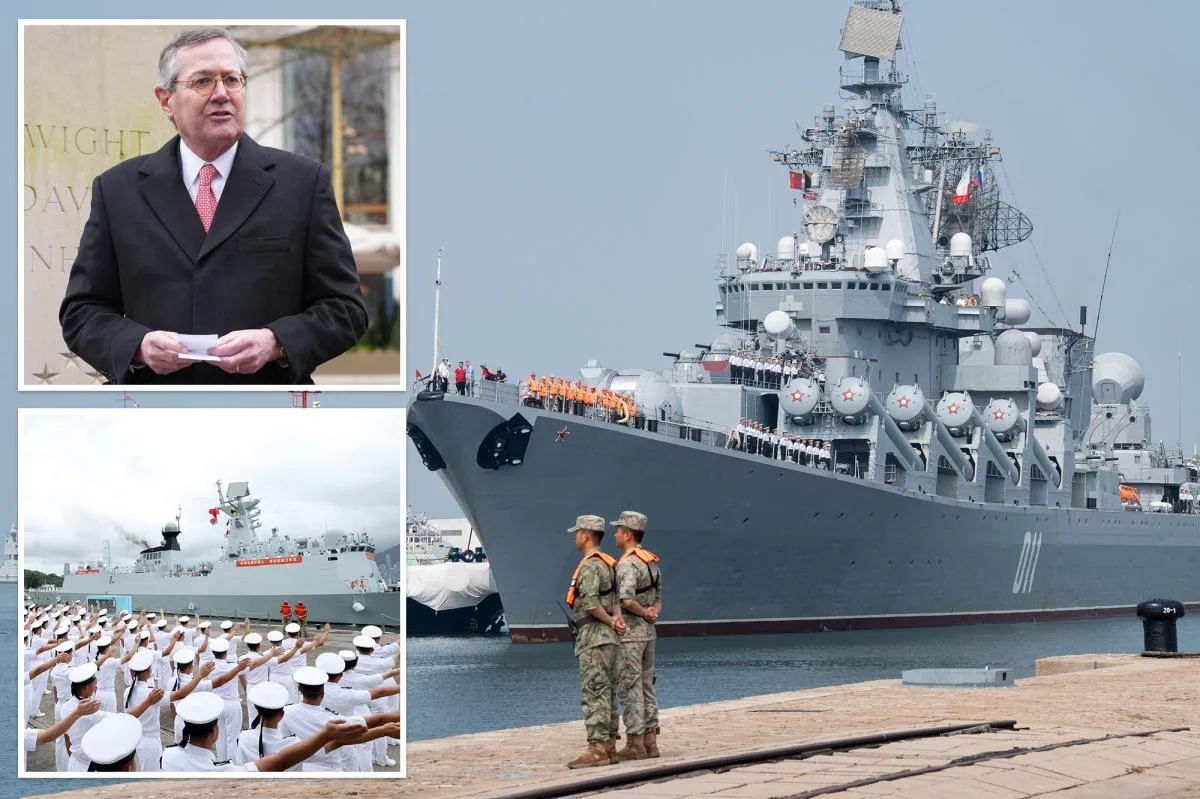
The United States is raising alarms over China’s expanding control of global maritime infrastructure, warning that Beijing is transforming ports, vessels, and supply chains into tools of geopolitical leverage. The US ambassador to the United Kingdom highlighted China’s use of maritime power as a form of political coercion during a speech to the International Maritime Organization Council.
China’s approach goes beyond commercial ambition, involving aggressive acquisition of foreign port concessions and infrastructure to enhance its strategic reach. This tactic, according to the ambassador, risks compromising the sovereignty of nations worldwide. The US, on the other hand, positions itself as a vital pillar in the global maritime economy, underpinning trillions of dollars in economic activity and supporting millions of jobs through its Maritime Transportation System.

Amid these maritime tensions, former President Donald Trump has renewed calls for the United States to assert greater control over Greenland. Speaking at a NATO summit, Trump criticized Denmark’s funding and management of Greenland, emphasizing Greenland’s crucial location between the Arctic and the North Atlantic. He argued that Greenland’s strategic importance demands a US presence to counter expanding Chinese and Russian military activities in the region.
Trump pointed to the growing naval presence of China and Russia near Greenland and suggested that the United States could reduce its military footprint in Europe while strengthening its influence in the Arctic. His remarks align with broader US national security concerns regarding free navigation and Arctic dominance, where Greenland serves as a critical outpost.
The ambassador also noted that the Trump administration has prioritized restoring American leadership in maritime affairs amid China’s increasing dominance. China currently accounts for the construction of more than half of the world’s commercial ships, giving it unparalleled influence over global shipping lanes and logistics networks.
This growing maritime footprint enables Beijing to leverage economic dependencies into political influence, a strategy the US warns it cannot overlook. Satellite imagery and naval exercises, such as China and Russia’s ‘Joint Sea-2026,’ underscore the strengthening military cooperation between these two powers, further complicating global maritime security.
The US stance, as conveyed by its ambassador, calls for vigilance and proactive engagement in maritime governance and infrastructure, reaffirming America’s role as a guardian of open sea lanes and the international economic order.