

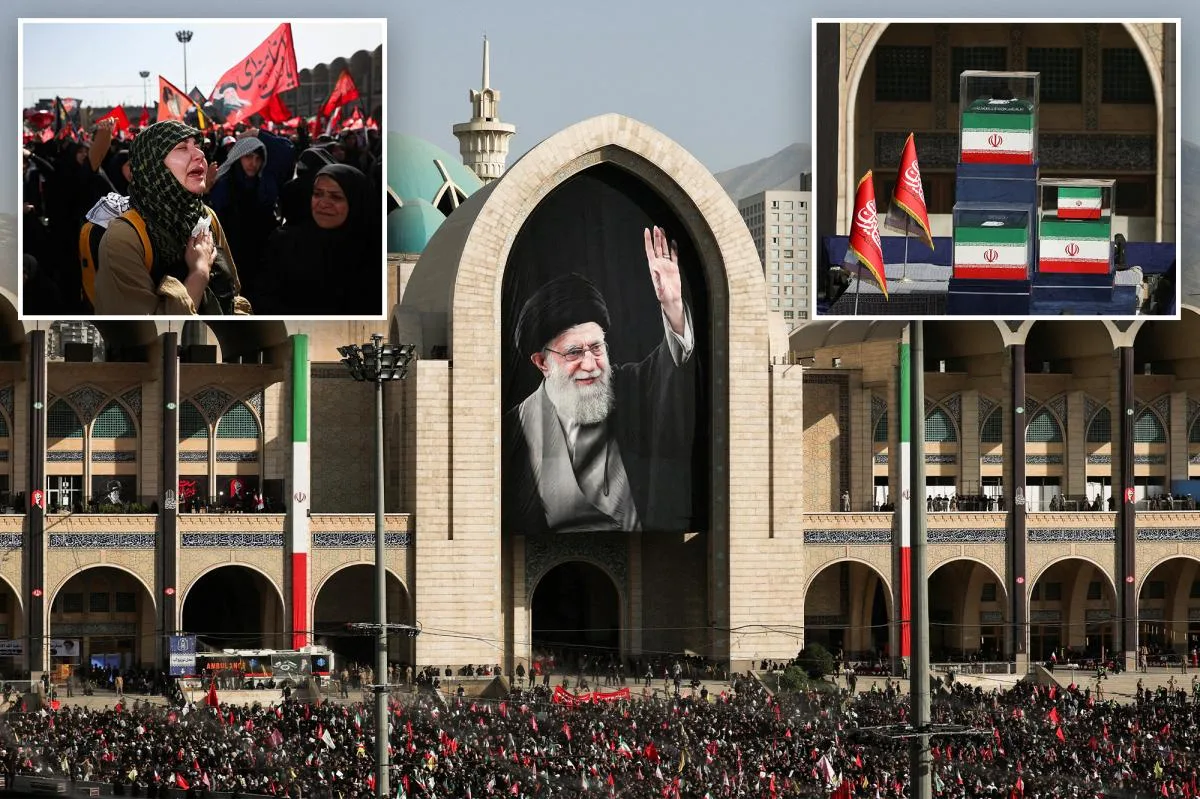
Millions of Iranians flooded the streets of Tehran and other key cities for several days of mourning over the death of Supreme Leader Ali Khamenei, who died earlier this year in a US-Israeli strike. The scale of attendance was expected to reach between 10 and 15 million, marking one of the largest public gatherings in recent Iranian history.
The state-organized memorial ceremonies commenced with a 24-hour public farewell at the vast Imam Khomeini Grand Mosalla in Tehran, before a funeral procession scheduled days later. Additional services were planned in the holy city of Qom, followed by burial at the shrine of Imam Reza in Mashhad, a revered Shiite site and Khamenei’s hometown.

Khamenei succeeded Ayatollah Ruhollah Khomeini as Supreme Leader and played a pivotal role in shaping Iran’s political and military apparatus, including the formation of the Islamic Revolutionary Guard Corps. The IRGC wields considerable influence within Iran and beyond, being linked to regional conflicts and backing various proxy groups.
Authorities faced security challenges holding back the funeral proceedings for months, but eventually organized the state funeral amid ongoing regional tensions. The ceremonies coincided with the United States’ 250th Independence Day celebrations, intensifying the symbolic contrast between the two nations. Reports indicated that the US temporarily eased military pressure on Iran during Khamenei’s mourning period, while rhetoric from American officials highlighted ongoing hostilities and diplomatic brinkmanship.
Massive banners and murals of Khamenei adorned the Grand Mosalla and surrounding areas, affirming his lasting presence in Iran’s political and religious identity. The state media continued to issue warnings and threats towards the US during the mourning, reflecting the lingering distrust and confrontation that marked Khamenei’s tenure.