

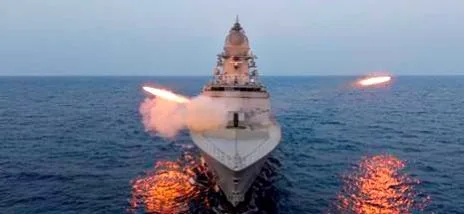
The Indian Navy expanded its fleet with the induction of its sixth advanced stealth frigate, yet concerns linger over its broader ambition to reach 200 warships by 2035. Despite completing the bidding process for eight Next Generation Corvettes (NGCs) under Project 28A, final approval from the Cabinet Committee on Security (CCS) remains pending, stalling a critical element of the expansion plan.
One key issue involves the strategic relevance of deploying missile-armed corvettes, which carry surface-to-surface and surface-to-air missiles similar to the newly inducted frigates. Some policymakers question the necessity of such corvettes given the Navy's existing frigate capacity, especially as the regional threat landscape evolves.

Heightened concern centers on submarine threats from China and Pakistan. China is assisting Pakistan in constructing eight advanced diesel-electric attack submarines equipped with Air Independent Propulsion (AIP), with the first already delivered. These submarines are expected to be deployed in the Arabian Sea and Bay of Bengal, challenging India’s naval dominance in these areas. In response, analysts argue the Indian Navy should prioritize acquiring more substantial anti-submarine warfare platforms capable of deep-water operations rather than smaller vessels.
Currently, the Navy operates four Kamorta-class anti-submarine warfare corvettes and is fielding 16 smaller shallow water crafts dedicated to coastal and harbor defense. Nevertheless, the persistent presence of Chinese submarines in the Bay of Bengal and Pakistan’s expected submarine deployment underscore the need for advanced anti-submarine assets operable in open waters.
While waiting for decisions on Project 28A corvettes, the Navy is advancing its production of 11 Next Generation Offshore Patrol Vessels (NGOPVs), with initial deliveries anticipated within the next few years. Construction is underway at Goa Shipyard Limited and Garden Reach Shipbuilders and Engineers Limited in Kolkata. However, given the procurement and build timelines, new warships will not likely join the fleet before 2030 even if fresh orders are placed soon.
Beyond corvettes and patrol vessels, the Navy is planning to commission Next-Generation Destroyers (NGDs), intended as successors to the Vishakapatnam-class stealth destroyers. This project carries an estimated cost of Rs 80,000 crore and aims to bolster the Navy’s surface combat capabilities significantly. Parallel to this effort, deliveries for AIP-equipped next-generation conventional submarines under Project 75(I) are scheduled to commence around 2033.
An ongoing Rs 70,000 crore initiative, Project-17 Bravo (P-17B), targets the induction of next-generation frigates featuring advanced stealth technology, integrated electric propulsion, and enhanced Vertical Launching System missile arrays. This program reflects India’s focus on maintaining cutting-edge maritime strike capabilities.
Additionally, the government has granted initial approval for four large Landing Platform Docks (LPDs), with a displacement of approximately 32,000 tons each. These ships will enhance amphibious operations and logistical reach, broadening the Navy’s operational versatility.
The Indian Navy’s fleet modernization and expansion programs face a complex strategic calculus: balancing the need for versatile missile corvettes with an urgent imperative to strengthen anti-submarine warfare amidst evolving regional submarine capabilities. The pending CCS clearance and future procurement choices will critically shape India’s maritime posture in the critical decade ahead.