

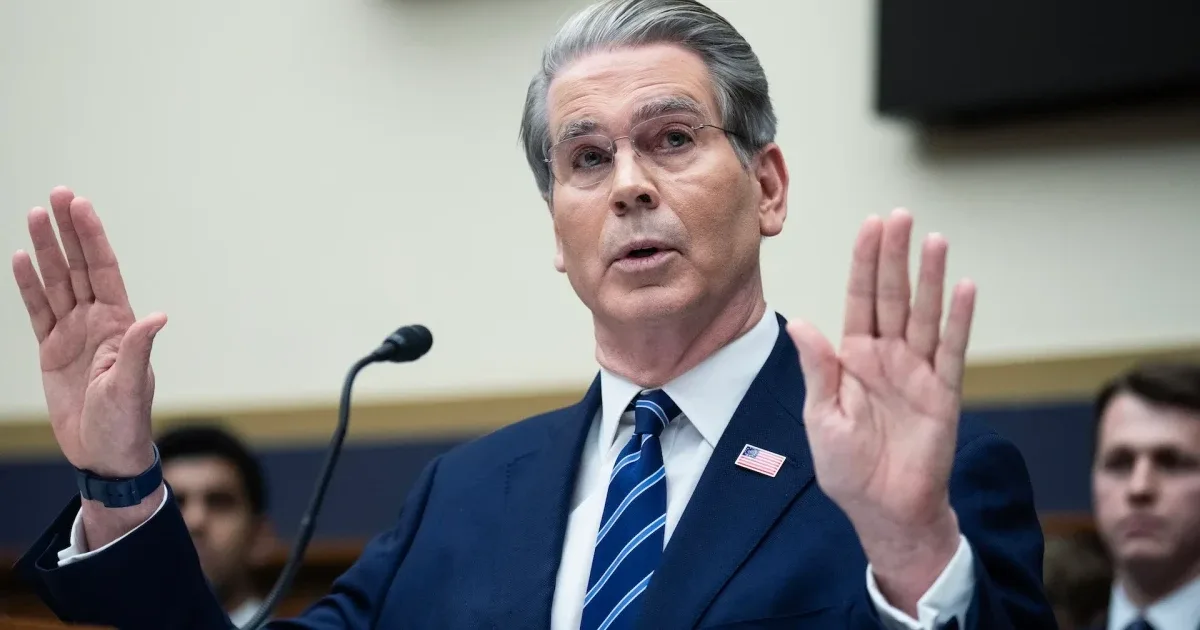
Treasury Secretary Scott Bessent downplayed scrutiny over Donald Trump’s cryptocurrency earnings despite recent financial disclosures revealing at least $1.4 billion in crypto and memecoin-related income projected for 2025. Speaking in a CBS News interview, Bessent rejected the notion of an “appearance problem” tied to Trump’s digital asset earnings, describing the administration’s stance as one of fostering innovation within the sector.
The president’s expanding crypto ventures have sparked debate about the potential conflicts of interest when a sitting president simultaneously oversees regulatory policies affecting a market in which he personally profits. While the Trump family has amassed multi-billion-dollar wealth through various crypto projects since late 2024, some investors in those same endeavors have reported significant paper losses, adding complexity to the administration’s regulatory approach.

Coinciding with Bessent’s remarks, the Treasury rolled out expanded features for the Trump Accounts program—an initiative established by the 2025 reconciliation law offering tax-deferred benefits. Set to begin accepting contributions on July 4, 2026, this program allows parents, guardians, and authorized individuals to open new IRA-style accounts for eligible U.S. citizen children born from January 1, 2025, through December 31, 2028. Each qualifying child will receive a one-time federal contribution of $1,000 as part of the initiative.
In addition to launching a dedicated Trump Accounts app nationwide and activating account opening notifications, the Treasury recently enabled the donation of corporate and individual stock shares to these accounts. This new financing mechanism aims to broaden investment options for families enrolling their children.
Bessent also addressed broader economic challenges in his interview, characterizing the current climate as strained yet manageable. He cited inflationary pressures, geopolitical tensions related to the conflict in Iran, and general market uncertainty as factors affecting both households and investors. Congressional inquiries have intensified recently concerning Trump-related tax and audit issues, adding political complexity to the Treasury’s agenda.