

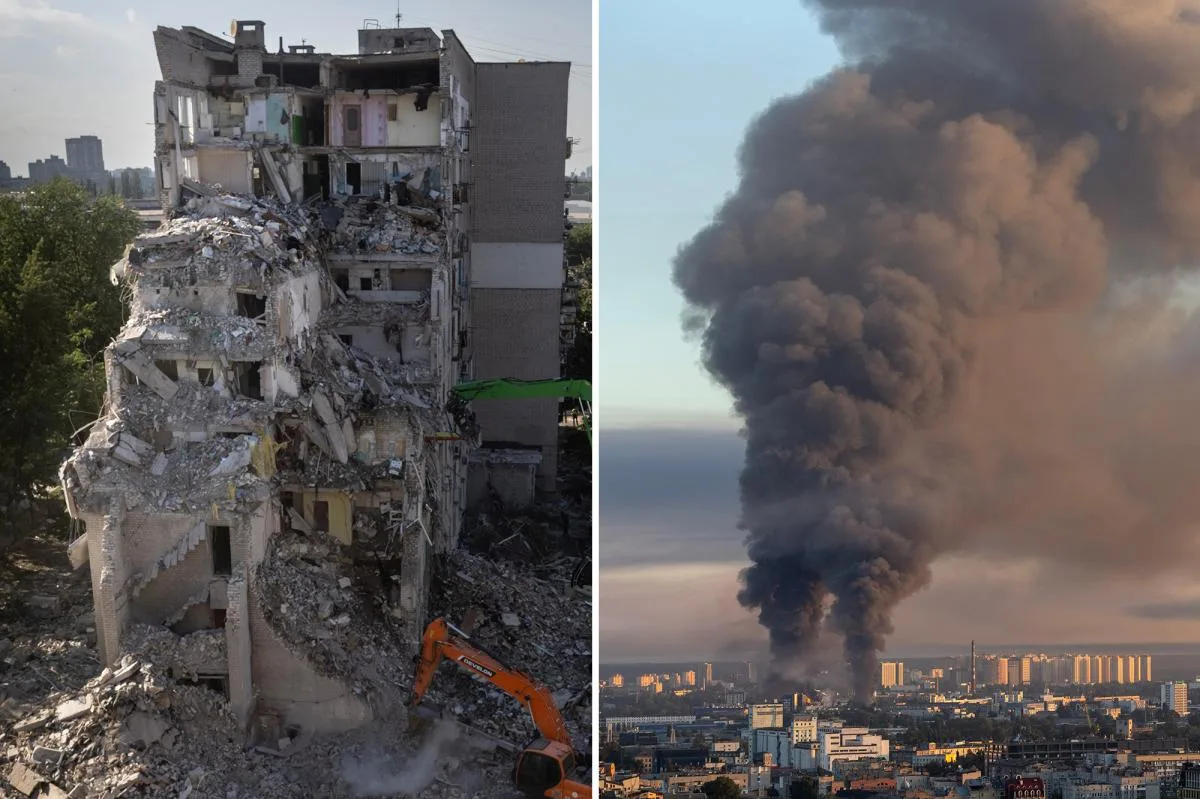
Russian forces launched a devastating assault on Kyiv utilizing newly deployed jet-powered drones that can reach speeds of up to 310 miles per hour, complicating Ukraine’s efforts to intercept them. This advanced drone technology contributed to an attack that left at least 30 dead and injured dozens more, as well as significant damage to nearly 130 buildings across the capital.
The rapid pace of these drones outmatches Ukraine’s mobile air defense units, which struggle to respond effectively without support from ground-to-air missile systems or fighter jets. Ukrainian officials highlighted that the increasing share of these jet-powered Shahed drones in Russian strikes strains their resources and heightens civilian risks. The Institute for the Study of War noted that faster drones are likely to increase civilian casualties by circumventing existing defenses.

In addition to drones, the Russian attack involved a significant volley of ballistic missiles, with nearly 30 launched in this single strike—an unusually high number according to Ukrainian military sources. Despite Ukraine’s claim of intercepting about 90% of incoming drones and missiles, the scale of the attack caused widespread destruction and forced residents to seek refuge underground overnight.
Rescue teams continued to work tirelessly amid the rubble of a collapsed residential building, searching for survivors. The death toll and injuries are expected to rise as clearing efforts proceed. The head of Kyiv’s military administration reported that at least 91 people were wounded in the air assault, which ranks among the deadliest experienced by the city during the ongoing conflict.
President Volodymyr Zelensky, who had been abroad, returned immediately to Kyiv to assess the damage firsthand. He criticized international partners for slow delivery of promised air defense systems, urging allies to honor their commitments to help protect civilians and infrastructure against these sophisticated attacks.
Meanwhile, the Russian Defense Ministry framed the operation as a massive retaliatory strike in response to Ukrainian drone attacks inside Russia. This latest escalation marks a shift in Moscow’s tactical approach, emphasizing greater use of high-speed drones and ballistic missiles to maximize destruction and strain Ukrainian defenses.